Apartment & Condo EV Charging Rights in Florida
Apartment condo EV charging rights Florida is the question for a growing share of Orlando EV owners — downtown condos, Lake Nona townhomes, Dr. Phillips apartments, gated communities in Windermere. Can I install an EV charger in an apartment or condo? In many cases, yes. The options run from a simple Level 1 plug to a dedicated Level 2 charger in your own parking space, and Florida law protects the dedicated-space case. This guide explains the spectrum, the law, the landlord question, and the practical details of dedicated bays, shared parking and sub-metering.
This guide is general information about Florida law, not legal advice. Association rules vary, and a disputed denial may need advice from a Florida attorney who handles community association law.
Orlando EV Installers works in apartments, condos and townhomes across Orange, Seminole and Osceola counties. Call (407) 555-0134 (placeholder) and we will survey your parking and your panel and help with the approval packet. A typical Level 2 home install runs $800–$2,500 including the charger, with simple short-run jobs from around $599 — condo and townhome jobs can cost more when the wire route is long.
The Options Spectrum: From $0 to a Dedicated Charger
Start with the cheapest option and work up. Level 1 charging — a standard 120-volt household outlet, charging at 3 to 5 miles per hour — costs nothing to start if an outlet is already near your parking, and it is enough for a driver who covers short daily distances and can leave the car plugged in overnight. It is slow, but it is real charging, and for many apartment dwellers it is the right first step while a Level 2 solution is arranged.
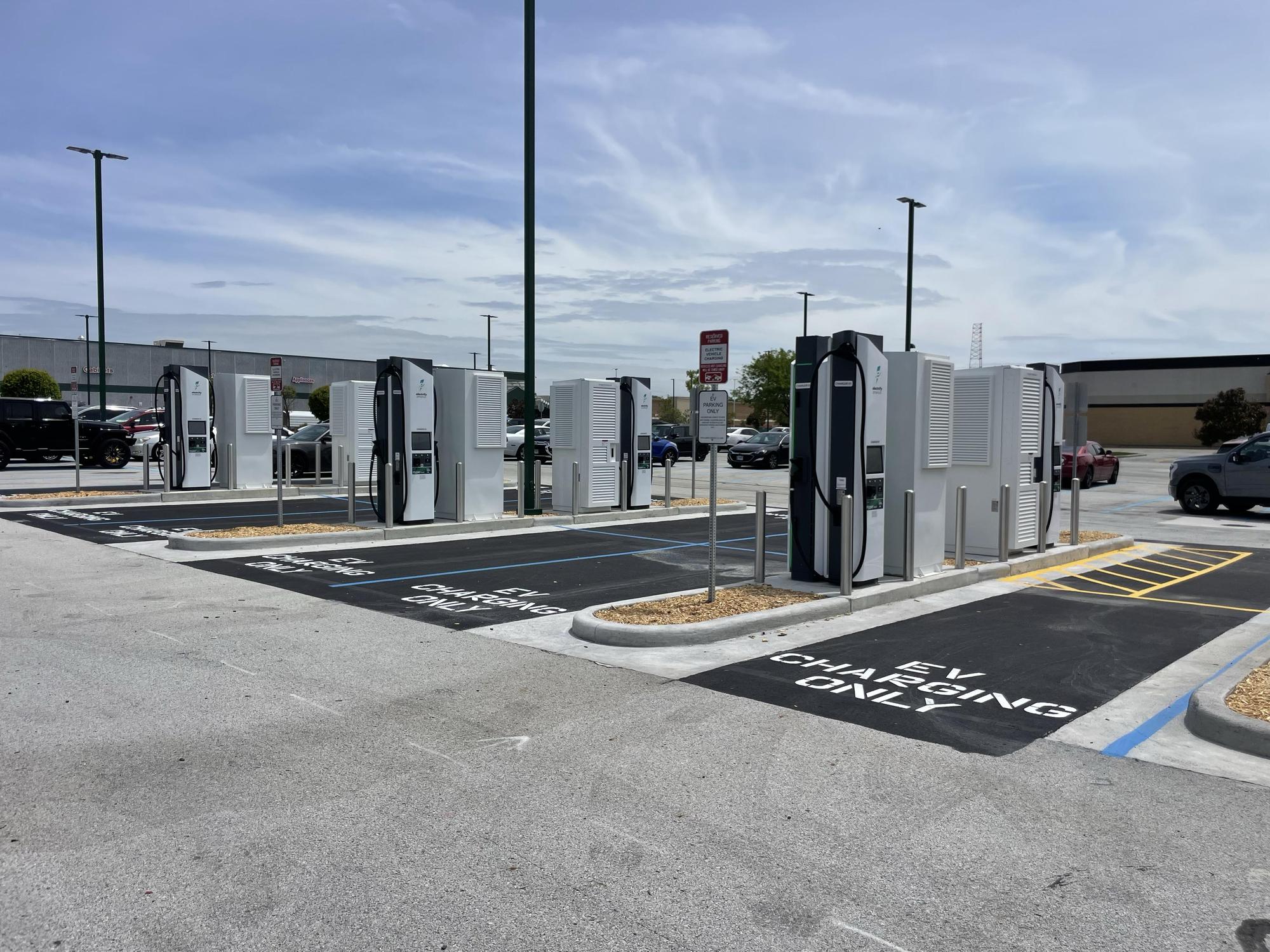
Next is a shared Level 2 charger: one or two chargers in the garage or car park that several residents use, with a booking system or a billing system to share the cost. This is the right answer for buildings where most residents drive EVs occasionally, or where individual circuits to every space would be impractical. Our commercial EV charging station installation service covers shared systems for multi-unit properties, with load management and networked billing.
At the top of the spectrum is a dedicated Level 2 charger in your own designated parking space — your charger, your circuit, your electricity. This is the most convenient option, the one Florida law protects, and the one this guide spends the most time on. It is also the most expensive, because the wire run from the panel to the space can be long, and the permit, the metering and the association approvals all add steps.
The Law: FL Statutes 718.113 and 720.3075, Strengthened by HB 163
FL Statute 718.113 applies to condominiums, and FL Statute 720.3075 applies to homeowners associations. Both were strengthened by HB 163, and together they say that an association cannot prohibit an EV charger in an owner's designated parking space. The owner pays for the installation, and the association may set reasonable architectural and insurance conditions.
What can my HOA still ask for? A reasonable architectural approval form, the charger model and mounting location, the wire route, proof of a licensed electrician and a permit, and proof of insurance. The key word is reasonable: a condition that protects the building or other residents is reasonable; a condition designed to make the install impractical is not. Our guide to whether an HOA can stop an EV charger install covers the statutes, the approval packet and what to do if the board says no.
Can I Install a Tesla Charger in an Apartment?
Yes, in principle. A Tesla Wall Connector can be installed in an apartment or condo garage if the association or landlord approves a dedicated space and a licensed electrician runs a permitted circuit to it — a 60-amp breaker for 48-amp charging, or a smaller circuit if the panel or the approval calls for it. The Wall Connector is a popular choice for condos because it is compact, outdoor-rated and easy to manage through the Tesla app.
The simpler starting point is a Tesla Mobile Connector on an existing outlet — Level 1 on a standard outlet, or Level 2 on an existing NEMA 14-50 if the garage already has one. That needs no new circuit and no permit, and it lets you charge while the dedicated install is being approved. Our Tesla Wall Connector ownership guide covers the unit, and our Tesla Wall Connector installation service covers the install itself.
Renters: Landlord Permission Is the Practical Step
Dedicated Bay vs Shared Parking
Sub-Metering: Who Pays for the Electricity?
Costs and the Approval Packet
Budget the typical range — $800–$2,500 including the charger, from around $599 for a simple job — and expect the higher end when the wire route is long, the parking is shared, or sub-metering is needed. Panel work adds roughly $2,000–$5,000 when a load calculation requires it, and in a condo the panel in question may be a common panel, which makes the load calculation a building-level question.
The approval packet should include the charger model, the mounting location and wire route, the parking space number, confirmation of a licensed electrician and a permit, proof of insurance, and the metering proposal. Submit it in writing, keep a copy, and note the date. A complete packet is the fastest route to a yes.
The Bottom Line
Apartment and condo charging in Florida is a spectrum, not a dead end: Level 1 for a start, shared Level 2 for the building, dedicated Level 2 for your own space — protected by Florida law, paid for by the owner, and approved through a reasonable process. Renters act through the landlord, and a plug-in charger is the renter's best friend.
Orlando EV Installers are licensed and insured Florida electricians, and we handle permits and inspection on every job, with a load calculation first. Call (407) 555-0134 (placeholder), or see our residential EV charger installation, our commercial EV charging station installation and our Level 2 EV charger installation. Related reading: our HOA guide, our Florida HOA rights guide and our moving-house guide. We serve Downtown Orlando and Dr. Phillips and all of Central Florida — more in the blog and guides hub.
Questions Homeowners Ask Us
Can I install an EV charger in an apartment or condo?
In many cases yes. Options range from Level 1 charging on an existing outlet, to a shared Level 2 charger, to a dedicated Level 2 charger in your designated parking space with HOA or condo approval. Renters normally act through the property owner.
Can my HOA stop me installing an EV charger in Florida?
Under Florida Statutes 718.113 for condominiums and 720.3075 for HOAs, strengthened by HB 163, an association cannot prohibit an EV charger in an owner's designated parking space. It can set reasonable architectural and insurance conditions, and the owner pays.
I rent — can I still charge at home?
Often yes, with the landlord's agreement. A plug-in charger on a NEMA 14-50 outlet is the easiest option for renters, because it travels when you move.
Can I install a Tesla charger in an apartment?
A Tesla Wall Connector can be installed in an apartment or condo garage if the association or landlord approves a dedicated space and a licensed electrician runs a permitted circuit. A plug-in Tesla Mobile Connector on an existing outlet is the simpler starting point.
What can my HOA still ask for?
A reasonable architectural approval form, details of the appearance and wire route, proof of a licensed electrician and a permit, and proof of insurance. Conditions must be reasonable — they cannot be used as a back-door ban.