Hurricane & Storm Preparedness for Your Home EV Charger
Hurricane storm preparedness EV charger is not a topic most Orlando homeowners think about until a storm is already on the forecast — and by then the useful steps are the simple ones. Charge the car fully. Know where your charger breaker is. Make sure surge protection is in place. And after the storm, inspect before you energise anything. This guide covers the before, during and after, for the charger, the car and the home around them.
Orlando EV Installers installs Level 2 chargers built for Florida conditions across Orange, Seminole and Osceola counties — weatherproof outdoor mounting where needed, surge protection on the circuit, and permitted, inspected work. Call (407) 555-0134 (placeholder). A typical Level 2 home install runs $800–$2,500 including the charger, with simple short-run jobs from around $599.
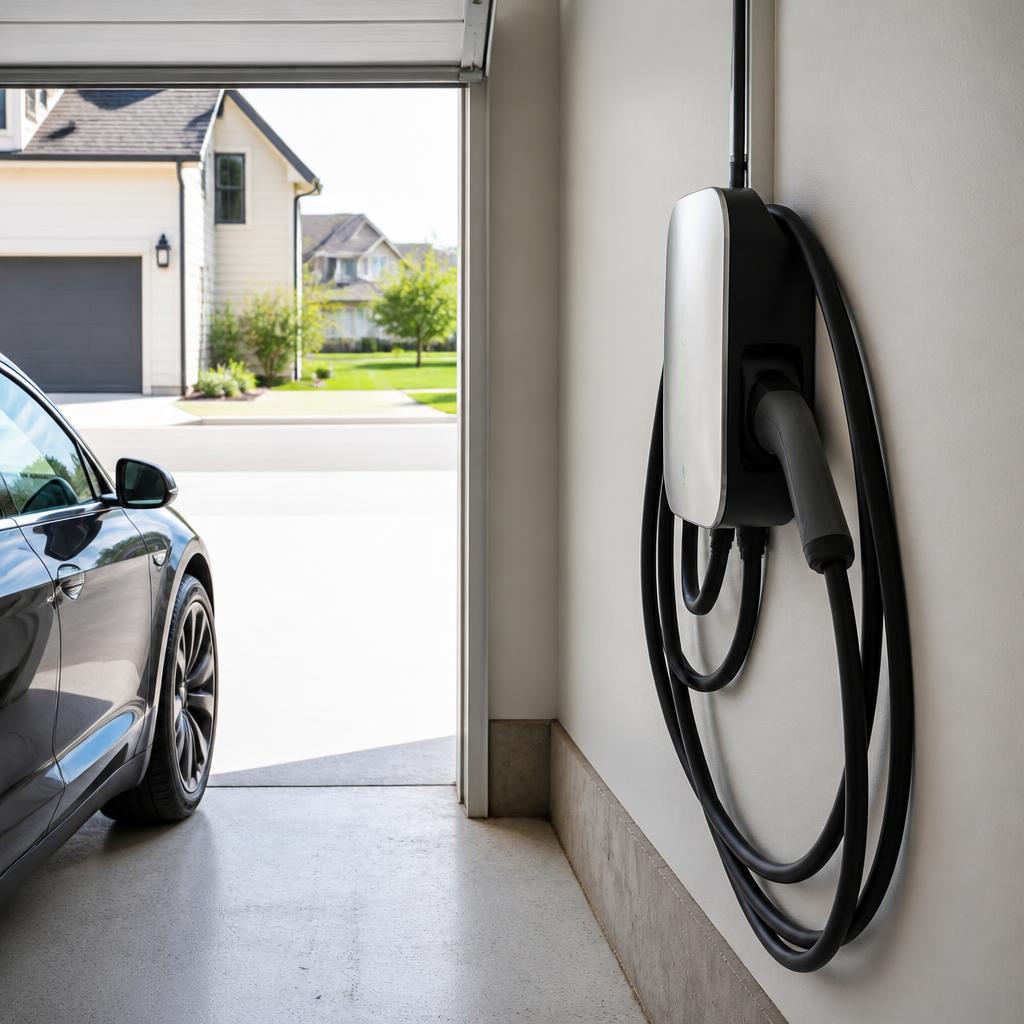
Before a Storm: Charge the EV Fully
The single most useful step is also the simplest: charge the EV fully before the storm arrives, while the grid is still up. A full battery is your fuel reserve. If roads close, if petrol stations lose power, or if public charging stations are down, a charged EV can still get you to a shelter, a pharmacy or a relative's home — and it can run its own climate control and charging for phones while you wait. Charge to 100 percent for a storm, even if you normally stop at 80 or 90 percent for daily battery health; the exception is worth it when the grid may be down for a while.
Charge early, not at the last minute. If the storm track shifts or the grid goes down earlier than forecast, a car that was charged the day before is ready; a car that was waiting for an overnight charge may not be. If you have a second EV, charge that one too — and if you have a portable Level 1 charger, keep it with the car, because a standard household outlet at a shelter or a friend's home may be the only charging available after the storm.
Know Your Charger Breaker
Surge Protection: Central Florida Is the Lightning Capital
During an Outage: What Works and What Does Not
After a Storm: Inspect Before You Energise
After a storm, inspect the equipment before energising anything. Look at the charger, the cable, the connector and the mounting: is there water inside the unit, debris, a cracked housing, a damaged cable, or a mounting that has shifted? Look at the panel and the conduit: is anything loose, wet or scorched? If anything looks damaged, wet inside or smells of burning, leave the charger breaker off and call a licensed electrician. Do not switch the breaker back on to "see if it still works" — energising damaged electrical equipment is how a bad day becomes a dangerous one.
The same rule applies to the car. If the car was in standing water, do not charge it until it has been checked — water and high-voltage batteries are a combination for a professional, not a driveway experiment. If the car is undamaged and the charger is undamaged, charge normally once the grid is back, and watch the first charge for anything unusual: a smell, a noise, an error message or a breaker that trips. Our guide to a charger that keeps tripping the breaker and our maintenance guide cover what to check.
If the charger was damaged, a repair or replacement may be needed — our EV charger repair and maintenance service covers diagnostics and replacement, and our guide to when to replace or upgrade a charger explains the decision.
A Short Storm-Season Checklist
1. Before the storm
Charge the EV fully, and the second EV too. Know where the charger breaker is. Keep the portable charger with the car.
2. Before the storm
Check the charger mounting, the cable and the surge protection. Store the cable off the ground and clear of water.
3. During the outage
Expect the charger and standard solar to be off. Conserve the car's charge. V2H works only if it was installed before the storm.
4. After the storm
Inspect the charger, cable and panel for damage or water before switching the breaker back on. Call an electrician if anything looks wrong.
The Bottom Line
Storm preparedness for an EV charger is a handful of simple habits: charge fully and early, know the breaker, protect against surges, and inspect before you re-energise. None of them requires a new purchase or a major install — and all of them are easier to do before the forecast than during it.
Orlando EV Installers are licensed and insured Florida electricians, and we handle permits and inspection on every job, with a load calculation first. Call (407) 555-0134 (placeholder), or see our Level 2 EV charger installation, our residential EV charger installation and our EV charger repair and maintenance. Related reading: our V2H backup power guide, our solar charging guide and our outdoor installation guide. We serve Kissimmee and St. Cloud and all of Central Florida — more in the blog and guides hub.
Questions Homeowners Ask Us
What happens to EV charging on cloudy days or in a storm?
Clouds and thunderstorms cut solar production, and a grid outage stops charging entirely — the charger needs grid power. A standard solar system also stops in an outage, because its inverter shuts down for line-worker safety.
Can my EV power my home in an outage?
Only with a compatible vehicle and a vehicle-to-home system, such as a Tesla Cybertruck with Powershare or a Ford F-150 Lightning. Most EVs cannot do this. See our V2H guide.
Should I charge my EV fully before a hurricane?
Yes. Charge the car fully before the storm arrives, while the grid is still up. A full battery is your fuel reserve if roads close or charging stations lose power.
What should I check on my charger after a storm?
Inspect the charger, the cable and the mounting for water, debris or physical damage before energising anything. If anything looks damaged, wet inside or smells of burning, leave the breaker off and call a licensed electrician.
Does surge protection matter for an EV charger in Florida?
Yes. Central Florida is the lightning capital of the country, and a nearby strike can damage a charger, a car or a solar inverter. Surge protection on the charger circuit is cheap insurance.