EV Charger Maintenance Guide
A charger is low-maintenance, not no-maintenance. The quarterly checks, the firmware habit, and the repairs that are worth doing.
EV charger maintenance is one of those subjects that sounds dull until the charger stops working — and then it is the most interesting subject in the house. The good news is that a home charger needs very little: a quarterly inspection of the cable and connector, a check for heat or damage, a firmware update habit, and a clear space around the unit. That is most of it. This guide covers the full routine, how often each check is needed, and the repairs that are worth doing versus the ones that mean replacement.
It also answers the two questions owners ask most: can an EV charger be repaired, and how often does an EV charger need updating? Short answers: often yes, and monthly for the app, automatically for the firmware. Read on for the detail.
Can an EV charger be repaired?
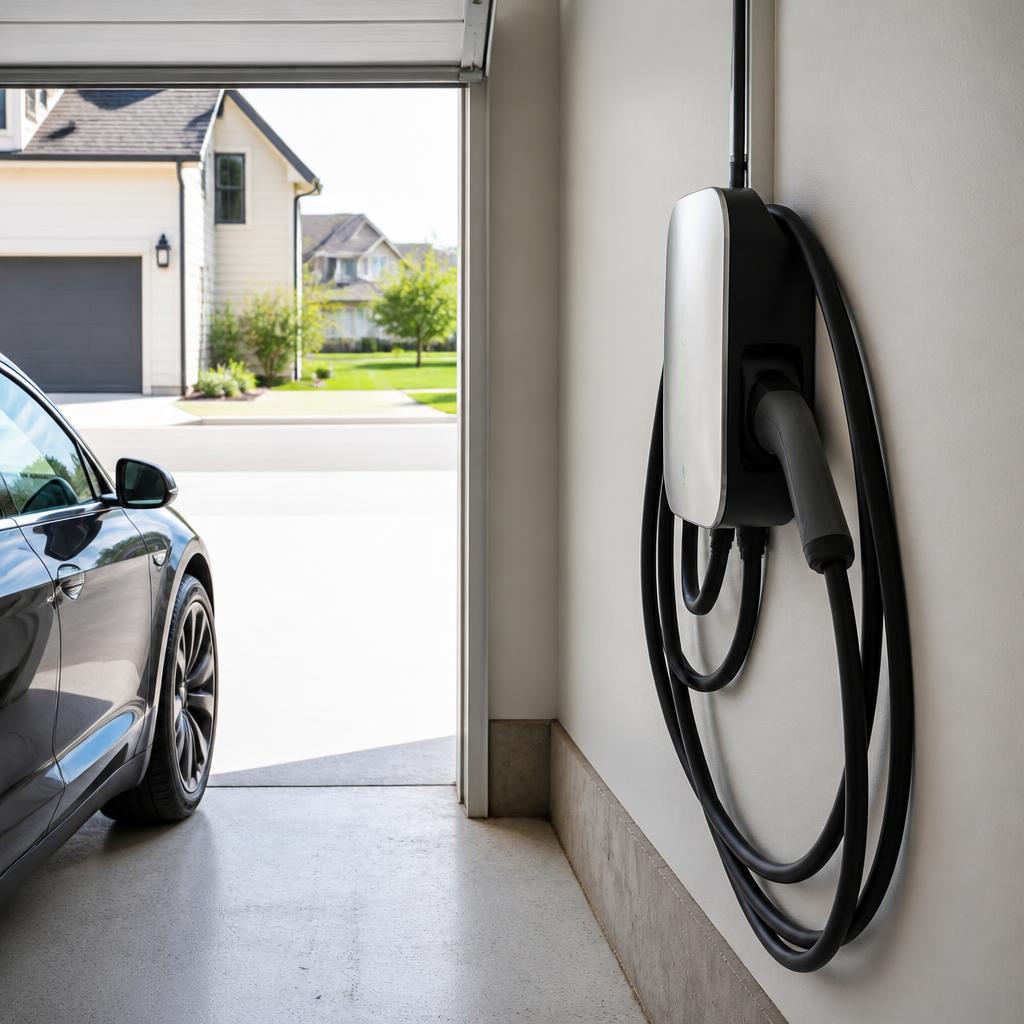
Can an EV charger be repaired? Often yes. Cable damage, a worn connector, a failed Wi-Fi module, a damaged holster, a faulty GFCI breaker on the circuit — these are all repairable, and they are the most common faults we see. A repair diagnosis identifies the fault first: we test the circuit, the breaker, the cable and the unit, and then recommend the repair or the replacement with the price of each. Many chargers can be repaired for far less than the cost of a replacement, especially when the unit is young and the fault is in a replaceable part.
What cannot be repaired economically is a failed main board on an old unit, a unit whose parts are no longer available, or a unit that has suffered flood, lightning or fire damage. In those cases replacement is the honest recommendation. Our guide to replacing or upgrading your charger covers the repair-versus-replace decision in full, including the rule of thumb: if the repair costs more than about half the price of a new charger, replace it.
The quarterly check: cable, connector, receptacle and heat
EV charger maintenance starts with a quarterly inspection, and it takes five minutes. Check the cable for cuts, cracks and exposed conductors. Check the connector for a latch that still clicks firmly, pins that are clean and undamaged, and a housing that is not cracked. Check the receptacle on a plug-in install for discolouration or a plug that feels loose. And check for heat: after a charge, the plug and the cable should be warm at most, never too hot to touch. Any sign of heat, damage or looseness means a call to an electrician — do not wait for the next quarter.
Also check the mounting and the area around the charger. The unit should be firmly fixed, the cable should hang on its holster and not lie on the floor, and the vents should be clear of dust, leaves and clutter. In a garage, that is usually all there is to it. Outdoors, also check the seals and the weatherproof cover, and clear any debris that has collected around the unit. Florida's summer storms leave debris everywhere, and a blocked vent is a hot charger.
How often does an EV charger need updating?
How often does an EV charger need updating? Enable automatic firmware updates, and check the app monthly. That is the whole routine. Firmware updates fix bugs, add features and keep the app working with your phone, and they are delivered over Wi-Fi — which is why the Wi-Fi connection matters even though the charger works without it. A charger that stops receiving updates is not dead, but it will gradually lose features, and eventually the app may stop recognising it. Check the app monthly for pending updates, and if an update fails repeatedly, follow the manual's reset procedure or book a diagnosis.
The other update is the one you do yourself: the charging schedule. Review it when your routine changes — a new job, a new commute, a second EV — and when your utility changes its rates or off-peak hours. A schedule that matched last year's routine may not match this year's, and a stale schedule is the most common reason a charger “suddenly” costs more to run. It is a two-minute check that is worth doing with the monthly app check.
Annual checks and surge protection
Once a year, the checks go a little deeper. The breaker and terminations should be inspected by an electrician — torque, condition, and any sign of heat — particularly on a plug-in install where the receptacle carries a continuous load. The surge protection device, if fitted, should be checked: surge protectors degrade with each event they absorb, and a spent protector looks identical to a working one. And the whole install should be reviewed if anything has changed: a new car with a faster onboard charger, a second EV, a panel change, or a move to a new home.
Surge protection deserves emphasis in Central Florida, the lightning capital of the country. A whole-home or dedicated surge protection device on the EV circuit protects the charger and the car from the voltage spikes that come with summer thunderstorms. If your home does not have surge protection, the annual check is a good moment to add it — it is a modest addition and a cheap one compared with a fried charger.
When maintenance is not enough
Maintenance catches wear early, but it cannot reverse it. A cable that is cracking, a connector that no longer latches, a receptacle that is discoloured, or a charger that faults weekly despite every check is telling you it is time for a repair or a replacement. Do not keep using a damaged charger while you decide — the risk is not worth the few nights of public charging. Book a diagnosis, get the repair and replacement prices, and choose with the facts.
A typical Level 2 install in Orlando runs $800–$2,500 including the charger, with simple short-run jobs from around $599 — but a maintenance check and a repair caught early cost far less than either, and a charger that is looked after lasts 10–15 years or more. The quarterly five minutes is the best money you will never spend.
Questions Homeowners Ask Us
Can an EV charger be repaired?
Often yes — cable damage, worn connectors, Wi-Fi faults and breaker issues are usually repairable, especially on younger units. Replace when the main board has failed, parts are unavailable, or the repair costs more than about half a new unit.
How often does an EV charger need updating?
Enable automatic firmware updates and check the app monthly. Updates fix bugs and add features; a charger that stops receiving them still charges but gradually loses app features.
How often does an EV charger need maintenance?
A five-minute quarterly check of the cable, connector, receptacle and heat, a monthly app and firmware check, and an annual electrician's check of the breaker, terminations and surge protection.
Can a charger be repaired if it was damaged by lightning?
Usually not economically — lightning, flood and fire damage generally mean replacement, even if the charger still powers on. Have it checked before using it again.
Ready to Get Your Charger Installed?
Every quote starts with a free on-site assessment and load calculation. Call (407) 555-0134 (placeholder) or visit our contact page to book your survey.
Related services: EV charger repair & maintenance, Level 2 EV charger installation, Residential EV charger installation.
Related guides: How long does an EV charger last?, EV charger keeps tripping breaker, When to replace or upgrade your EV charger.
Service areas: Winter Park, Oviedo — and all areas on our service areas page. Back to the EV charger guides hub.