Tesla Wall Connector vs ChargePoint Home Flex
The two most-searched home chargers in Orlando, compared honestly — connector, speed, app, and what your panel can actually carry.
If you are shopping for a home charger in Orlando, the search usually narrows to two names fast: the Tesla Wall Connector and the ChargePoint Home Flex. Both are well-made Level 2 chargers, both are installed on 240V circuits in Orlando garages every week, and both will charge your car overnight. The right choice is rarely about which unit is “better” in general — it is about your car, your connector, your panel, and whether you want a plug-in or hardwired install.
This guide compares the two in plain terms, then answers the specific question many Orlando homeowners ask: Tesla Wall Connector, ChargePoint Home Flex or Schneider Charge — which would an electrician install on a 100 amp service? The short answer is that any of the three can work on a 100-amp panel, but usually derated to a 40A circuit for 32A charging, or paired with load management. The load calculation decides, not the brand.
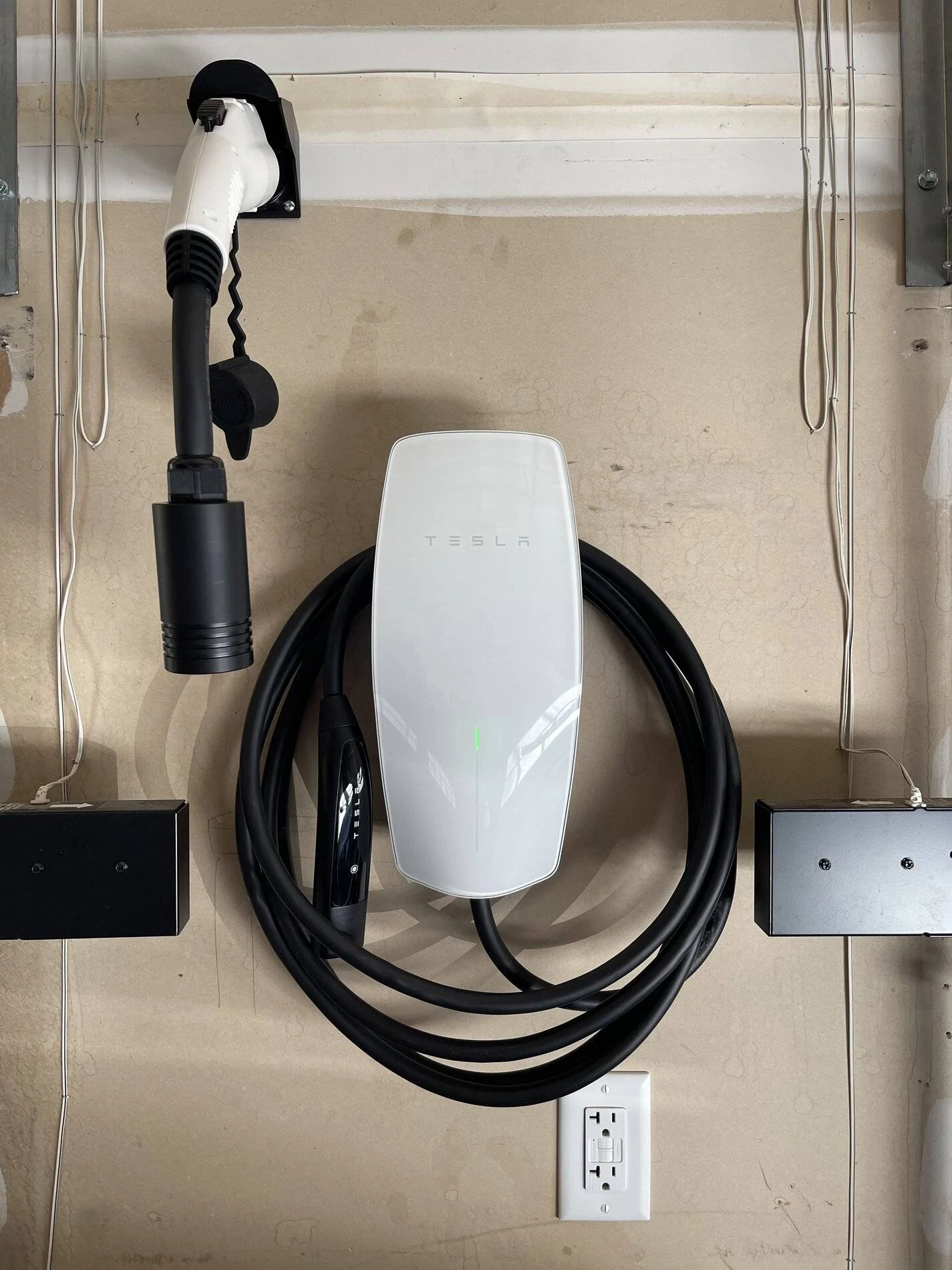
Tesla Wall Connector vs ChargePoint: the connector question comes first
The biggest practical difference is the plug. The Tesla Wall Connector uses the NACS connector, which is Tesla's connector and is now becoming the North American standard. If you drive a Tesla, it plugs straight in with no adapter. The ChargePoint Home Flex is available with a J1772 connector, which fits most non-Tesla cars — Ford, Rivian, Hyundai, Kia, Chevrolet and others — and with a NACS version for Tesla drivers who want ChargePoint's app and features. Adapters between J1772 and NACS exist for AC charging, but a native connector is simpler every single day, so start with your car's inlet and work backwards.
Both chargers are Level 2 units on a 240V circuit, so both deliver the same kind of overnight charging: roughly 25–44 miles of range per hour depending on the circuit and the car. Neither one is a DC fast charger, and neither belongs in a Level 3 conversation. Where they differ is in the details — app features, power-sharing, mounting, and whether the unit is hardwired or plug-in — and those details matter more than the badge on the front.
Hardwired or plug-in: how the two chargers are usually installed
The Tesla Wall Connector is a hardwired charger. It is wired directly into a dedicated circuit, which is the only way to reach its full 48A output on a 60A breaker. Hardwired installs are cleaner, weather-tighter outdoors, and have no receptacle to wear out — which is why electricians generally prefer them for a permanent garage or driveway install. The ChargePoint Home Flex can be installed hardwired or as a plug-in unit on a NEMA 14-50 outlet, which gives you flexibility: a plug-in charger travels with you if you move, and it is easier to swap later.
There is a trade-off. A plug-in install on a NEMA 14-50 outlet tops out at 40A of continuous charging on a 50A circuit, because the receptacle itself is rated at 50 amps. A hardwired install can go to 48A on a 60A circuit. For most drivers that difference is small — both fill a typical daily commute in a few hours overnight — but if you drive long distances daily or want the fastest home charging your car accepts, hardwired wins. Our NEMA 14-50 vs hardwired guide walks through the full comparison.
Which would an electrician install on a 100 amp service?
This is the exact question from real search data: “Tesla Wall Connector, ChargePoint Home Flex or Schneider Charge: which would an electrician install on a 100 amp service?” On a 100-amp panel, the honest answer is that all three are quality units and any of them can be installed — the question is at what amperage. A load calculation under NEC Article 220 looks at your whole home: air conditioning, water heater, range, dryer, pool equipment and everything else that can run at once. If the calculation is tight, we typically install the charger derated to a 40A circuit, which delivers 32A of charging — still roughly 25–30 miles per hour, and plenty for most daily driving.
The other option on a 100-amp service is a load management device, which monitors your panel and pauses or throttles the charger when the house peaks, then resumes when demand drops. That can let you run a 60A charger circuit on a panel that could not otherwise carry it, and it often avoids a panel upgrade that adds roughly $2,000–$5,000. Schneider Charge is a solid unit in this conversation too, with load-management-friendly features. The deciding factors, in order, are your car and connector, whether you want plug-in or hardwired, the app features you will actually use, and what your load calculation allows. Brand loyalty is the least important factor.
App, power-sharing and everyday living with either charger
Both chargers have apps for scheduling, monitoring and access control, and both benefit from Wi-Fi — though neither needs Wi-Fi just to charge. ChargePoint's app is often praised for its energy tracking and scheduling, and it integrates with the wider ChargePoint public network if you also charge away from home. Tesla's app experience is tightly tied to the Tesla ecosystem, and the Wall Connector supports power-sharing: two Wall Connectors on one circuit can share available power between two Teslas, which is a genuine advantage in a two-Tesla household. Our guide to charging two EVs at home covers power-sharing in detail.
Day to day, either charger will do the same job: you plug in when you get home, it charges on your schedule — ideally off-peak — and the car is full in the morning. Reliability matters more than features here, and both units have strong track records when installed correctly on a properly sized circuit with the right breaker and wire. The failures we see are almost never the charger brand; they are undersized circuits, loose terminations, or a charger set above its circuit rating. A licensed install with a correct load calculation protects either choice.
So which one should you choose?
Choose the Tesla Wall Connector if you drive a Tesla, want the cleanest hardwired install, want full 48A charging, or plan to power-share between two Teslas. Choose the ChargePoint Home Flex if you drive a non-Tesla with a J1772 inlet, want the option of a plug-in install on a NEMA 14-50 outlet, or prefer ChargePoint's app and energy tracking. Choose Schneider Charge if its features and pricing fit your setup and your electrician recommends it for your panel. All three are legitimate; the wrong choice is the one installed on a circuit your panel cannot carry.
A typical Level 2 home install in Orlando runs $800–$2,500 including the charger, with simple short-run jobs from around $599. The charger itself is only part of that figure — the wire run, breaker, permit and panel capacity matter just as much. Book a free site survey and we will run the load calculation, confirm which of these chargers your panel supports, and quote the job as one all-inclusive figure.
Questions Homeowners Ask Us
Tesla Wall Connector vs ChargePoint Home Flex — which is better?
Neither is better in general — it depends on your car. Tesla drivers usually suit the Wall Connector with its native NACS plug and power-sharing; non-Tesla drivers usually suit the ChargePoint Home Flex with J1772. Both are Level 2 chargers delivering roughly 25–44 miles per hour.
Tesla Wall Connector, ChargePoint Home Flex or Schneider Charge: which would an electrician install on a 100 amp service?
Any of the three can work on a 100-amp service, usually derated to a 40A circuit for 32A charging, or paired with a load management device. A load calculation under NEC Article 220 decides the safe amperage for your home.
Does the Tesla Wall Connector need Wi-Fi?
No — it charges without Wi-Fi. Wi-Fi enables firmware updates, power-sharing and access control, so we connect it during installation where the signal reaches the garage.
Ready to Get Your Charger Installed?
Every quote starts with a free on-site assessment and load calculation. Call (407) 555-0134 (placeholder) or visit our contact page to book your survey.
Related services: Tesla Wall Connector installation, Level 2 EV charger installation, Electrical panel upgrade.
Related guides: Tesla Wall Connector ownership guide, Best home EV chargers 2026, EV charger breaker and wire size guide.
Service areas: Winter Park, Lake Nona — and all areas on our service areas page. Back to the EV charger guides hub.