Charging Your EV with Solar Power in Florida
Charging EV with solar power Florida is a natural pairing: Florida has abundant sunshine, many Orlando homes already have rooftop solar, and an electric car is the biggest flexible load a house has. The idea is simple — let the sun fill the car — but the details matter: how the power actually flows, when to charge, what net metering pays you, and what happens when the grid goes down. This guide covers all of it, in plain language.
Orlando EV Installers installs Level 2 chargers in solar homes across Orange, Seminole and Osceola counties. Call (407) 555-0134 (placeholder) and we will check your panel, your charger options and the best charging setup for your system. A typical Level 2 home install runs $800–$2,500 including the charger, with simple short-run jobs from around $599.
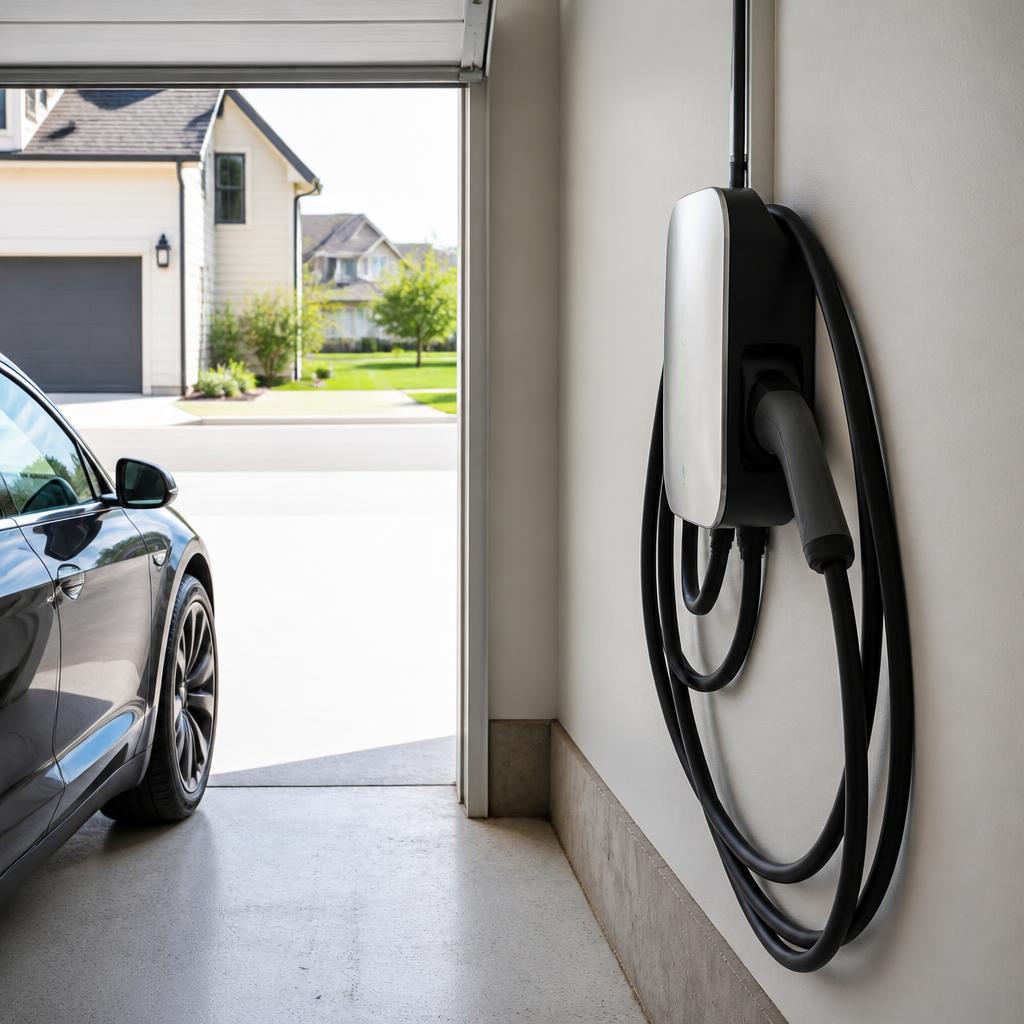
How Solar Power Reaches Your Car
The path is straightforward: your rooftop panels produce direct current, the inverter converts it to alternating current, and that power flows into your home's electrical panel. Your EV charger draws from the same panel, exactly like your air conditioner or your oven. The sun never charges the car directly — it powers your home, and the car charges from the home.
That shared panel is the key detail. Both the solar system and the EV charger connect to it, and both are limited by the same busbar rating. A load calculation and a look at the panel are essential before adding a charger to a solar home, because the solar inverter already occupies breaker space and the panel may be closer to its limit than it looks. This is why we always run a load calculation first, and why installing solar and a charger together — one panel plan, one site visit — is usually the cleanest option if you are planning both.
When to Charge: The Solar Window
The best charging window for direct solar use is late morning to early afternoon, when production is at its highest. That is also when most people are at work and the car is not at home — which is the central tension of solar EV charging. If your car is home during the day, charge then. If it is not, you have two good options: charge overnight from the grid and let net metering balance the bill, or use a solar-aware charger that follows your system's surplus whenever the car is plugged in.
Florida weather shapes the window. Afternoon thunderstorms cut production sharply, sometimes for an hour or more, and summer heat slows charging slightly. A solar-aware charger handles this automatically: a current sensor on the main feed watches how much surplus solar power is available and adjusts the charging rate to match, in eco or surplus modes. When a cloud passes, charging slows; when the sun returns, it speeds up. You set the minimum charge you need — say, enough for tomorrow's commute — and the charger fills the rest from sunshine when it can.
Net Metering: What Happens to Power You Do Not Use
Solar-Aware Chargers: Worth It?
Florida Specifics: Thunderstorms, Heat and Hurricanes
Florida is a demanding place for electrical equipment. Central Florida is the lightning capital of the country, so surge protection on the charger circuit matters — a nearby strike can damage a charger, a car or a solar inverter, and a surge device is cheap insurance. Heat matters too: chargers and inverters are rated for outdoor use, but they last longer and charge more steadily in shade and with airflow, so mounting location is worth thinking about. Our guide to installing an EV charger outdoors in Florida covers mounting and weatherproofing.
And the hard limit: a grid outage stops a standard solar system. Inverters shut down automatically when the grid goes down, for line-worker safety, so your panels produce nothing during an outage — and neither does your charger. Solar alone is not backup power. If backup matters to you, the routes are a compatible vehicle with vehicle-to-home capability, a home battery, or a generator. See our vehicle-to-home backup power guide and our hurricane and storm preparedness guide.
Installing Solar and a Charger Together
If you are planning both, do them as one project. One site visit covers the panel, the roof and the parking. One load calculation covers the solar inverter, the charger and the rest of the house. The busbar limits are checked once, the breaker space is planned once, and the wire routes are coordinated instead of competing. If the panel is tight — a 100-amp panel in an older Winter Park or Maitland home, for example — a load management device or a lower-amperage charger setting may be part of the plan, as explained in our 100-amp panel guide.
The order of work matters too. The solar installer and the EV charger installer should agree on who provides what: the panel work, the breaker space, the conduit route and the inspection sequence. We are happy to coordinate with your solar company, and we will tell you honestly if the panel needs work before either system goes in.
The Bottom Line
Solar and EV charging go well together in Florida, as long as you understand the deal: the sun powers your home, the car charges from the home, the best window is late morning to early afternoon, and net metering balances the rest on your bill. A solar-aware charger helps if the car is home in the day; a scheduled overnight charge works well if it is not. And remember the outage limit — solar alone will not keep the car charging or the lights on when the grid is down.
Orlando EV Installers are licensed and insured Florida electricians, and we handle permits and inspection on every job, with a load calculation first. Call (407) 555-0134 (placeholder), or see our Level 2 EV charger installation, our residential EV charger installation and our Tesla Wall Connector installation. Related reading: our V2H backup power guide, our EV charging cost vs gas guide and our guide to whether an EV charger raises your electric bill. We serve Winter Park and Lake Nona and all of Central Florida — more in the blog and guides hub.
Questions Homeowners Ask Us
Can I charge my EV from my solar panels?
Yes. Solar panels feed an inverter, which feeds your home panel, and the charger draws from the panel like any other load. The sun does not charge the car directly — it powers your home, and the car charges from the home.
What happens to EV charging on cloudy days or in a storm?
Clouds and afternoon thunderstorms cut solar production, so less of your charging comes from the sun and more comes from the grid. A grid outage stops a standard solar system entirely, because the inverter shuts down for line-worker safety.
Can my EV power my home in an outage?
Only with a compatible vehicle and a vehicle-to-home system — for example a Tesla Cybertruck with Powershare, a Ford F-150 Lightning, or a GM or Kia EV9 setup. Solar panels alone are not backup power. See our V2H guide.
When is the best time to charge an EV from solar?
Late morning to early afternoon, when solar production is at its highest and before the afternoon thunderstorms that are common in Central Florida. A solar-aware charger can follow the surplus automatically.
Do I need a panel upgrade to add solar and an EV charger together?
Not always, but both draw on the same home panel and the same busbar limits, so a load calculation and a single coordinated plan are essential. Installing them together usually means one site visit and one panel plan.