Level 1 vs Level 2 vs Level 3 Charging
Three levels, three speeds, one clear winner for home charging. The exact specs, the maths, and what each level is actually for.
Level 1, Level 2, Level 3 — the three levels of EV charging are the first thing a new EV owner has to learn, and the confusion is understandable: the numbers sound similar, the plugs look similar, and the marketing rarely explains the difference. The reality is simple. Level 1 is a standard wall outlet. Level 2 is a 240V home charger. Level 3 is DC fast charging at a public station, and it is not a home product. This guide compares all three with exact specs, so you can see why Level 2 is the home standard and what the other two are actually for.
The comparison table below is the whole guide in one place. Read it, then read the detail for the level you are considering — most readers will land on Level 2, and the rest of the guide explains why.
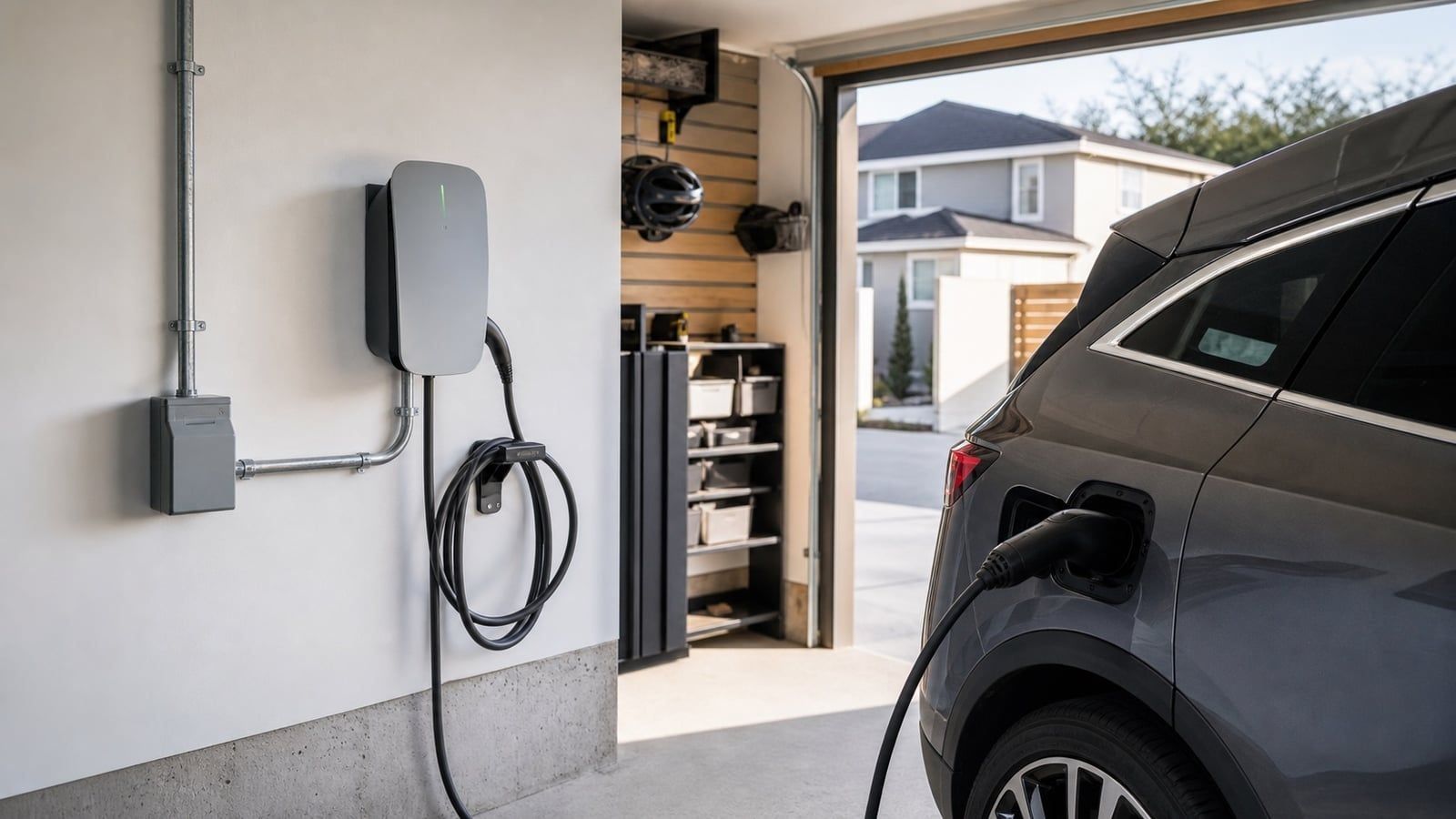
Level 1 vs Level 2 vs Level 3: the comparison table
| Level | Power | Speed | Full charge | Where |
|---|---|---|---|---|
| Level 1 | 120V | 3–5 mi/hr | 24–48+ hours | Standard wall outlet, home |
| Level 2 | 240V | 25–44 mi/hr | 4–10 hours | Home charger, workplace, public |
| Level 3 (DC fast) | 400V+ DC | 100–250+ mi/hr | 20–60 minutes | Commercial only |
Read the table as a story. Level 1 adds 3–5 miles of range per hour — enough to recover a short commute overnight, and not enough for much else. A full charge takes 24–48 hours or more, which means a Level 1 driver is always managing the battery, always calculating whether tonight's charge will cover tomorrow's driving. Level 2 adds 25–44 miles per hour, fills a typical daily commute in a few hours, and completes a full charge in 4–10 hours overnight. Level 3 adds 100–250 miles or more per hour and fills a battery in 20–60 minutes — but it does it at 400V+ DC, on commercial equipment, at a public station, not in a garage.
The speed gap between Level 1 and Level 2 is the whole argument for a home install. A driver doing 40 miles a day needs roughly 10 hours on Level 1 and under 2 hours on Level 2. That is the difference between charging being a background habit and charging being a daily calculation. A typical Level 2 home install in Orlando runs $800–$2,500 including the charger, with simple short-run jobs from around $599 — and for most drivers it pays for itself in convenience within the first month.
Level 1 charging: the outlet you already have
Level 1 charging uses a standard 120V household outlet — the same kind your phone charger uses — with the mobile connector that comes with the car. It needs no install, no permit and no electrician, and it is how many owners start. For a driver who does very few miles, or who has a plug-in hybrid with a small battery, Level 1 can be enough. For a full EV doing a normal commute, it is a stopgap: the car gains range so slowly that a long day's driving can take more than a night to recover, and a weekend trip can leave the battery low into the following week.
Level 1 also has a practical limitation: it ties up a standard outlet for hours at a time, and the mobile connector is a portable device, not a permanent install. It is the right answer for “I just got the car and the charger is not installed yet”, and the wrong answer for “this is my daily charging plan”. If Level 1 is your plan, be honest about your miles — and if the maths does not work, a Level 2 install is the fix.
Level 2 charging: the home standard
Level 2 is the home standard, and it is the level this whole site is about. A Level 2 charger runs on a dedicated 240V circuit — 40A, 48A or 60A — and delivers 25–44 miles of range per hour, completing a full charge in 4–10 hours overnight. It is a permanent wall-mounted unit, permitted and inspected, with a proper cable and holster, app scheduling, and the option of hardwired or plug-in installation. It is what “home EV charger” means in practice, and it is what the vast majority of Orlando EV owners use every night.
What is a Level 3 EV charger, by contrast? It is a DC fast charger — 400V+ DC, 100–250+ miles per hour, 20–60 minutes for a substantial charge — and it is commercial-only equipment. It needs a commercial electrical service, commercial permitting, and a price tag that puts it far beyond a home install. No home charger is Level 3, and no home install should be sold as Level 3. If a listing promises DC fast charging at home, it is mislabelled. Level 2 is the fastest home charging there is, and it is fast enough: it fills any car overnight.
Which level is right for you?
Choose Level 1 if you drive very few miles, have a plug-in hybrid, or are waiting for a Level 2 install. Choose Level 2 if you drive a full EV daily — which is almost everyone reading this guide. Choose Level 3 when you are on a road trip and need a fast top-up at a public station. That is the whole decision, and it is not a close one for most drivers: Level 2 is the level that makes EV ownership effortless, because the car is full every morning without any thought.
Within Level 2, the choices are the ones this site's other guides cover: which charger, hardwired or plug-in, what amperage your panel supports, and where to put it. Our best home EV chargers 2026 guide compares the chargers, our NEMA 14-50 vs hardwired guide compares the install styles, and our breaker and wire size guide explains the amperage question. Start with Level 2, then let those guides narrow it down.
Will Level 2 hurt my battery?
Will a Level 2 charger hurt my EV battery? No — Level 2 charging at 7–11 kW is daily-charge friendly, and it is how your car is designed to be charged at home. What wears batteries is DC fast charging used constantly, and charging to 100% and leaving the car there every day. Charge to 80% for daily driving, use Level 3 for road trips rather than daily charging, and your battery will last as designed. Most makers suggest 80–90% for daily use.
That is another reason Level 2 is the home standard and Level 3 is not: Level 2 is gentle enough for every night, and Level 3 is fast enough for the occasional road trip. The two levels complement each other — Level 2 at home, Level 3 on the highway — and together they cover every kind of driving an Orlando owner does.
Questions Homeowners Ask Us
What is the difference between Level 1, Level 2 and Level 3 charging?
Level 1 is 120V at 3–5 mi/hr (24–48+ hours for a full charge). Level 2 is 240V at 25–44 mi/hr (4–10 hours). Level 3 is 400V+ DC fast charging at 100–250+ mi/hr (20–60 minutes), commercial only.
What is a Level 3 EV charger?
A DC fast charger for public stations — 400V+ DC, 100–250+ miles per hour, 20–60 minutes for a substantial charge. It is commercial-only equipment, not a home product.
Is Level 2 charging the best for home?
Yes — Level 2 is the home standard. It fills a typical daily commute in a few hours overnight and completes a full charge in 4–10 hours, which is fast enough for every night.
Will a Level 2 charger hurt my EV battery?
No — Level 2 at 7–11 kW is daily-charge friendly. Charge to 80% for daily driving; constant DC fast charging and constant 100% are what wear batteries.
Ready to Get Your Charger Installed?
Every quote starts with a free on-site assessment and load calculation. Call (407) 555-0134 (placeholder) or visit our contact page to book your survey.
Related services: Level 2 EV charger installation, Residential EV charger installation, Commercial EV charging station installation.
Related guides: First EV home charging beginners guide, Best home EV chargers 2026, EV charger installation cost factors.
Service areas: Downtown Orlando, Lake Nona — and all areas on our service areas page. Back to the EV charger guides hub.