FPL Evolution Home Program Guide
What FPL's home charging program actually is, who it suits, and when a standard install you own outright is the better deal.
If your home is served by Florida Power & Light, you have probably seen the name FPL Evolution Home. It is FPL's EV charging program — the FPL home charging program that bundles a home charger with a charging plan, rather than you buying a charger and paying an electrician to install it. For some drivers it is a convenient, low-hassle route to home charging. For others — heavy drivers, solar homes, and anyone who wants to choose their own charger — a standard install you own outright works out better.
This guide explains the FPL Evolution Home flexible program in plain terms: what the FPL EV charging program includes, how the FPL electric charger program works in practice, and the questions to ask before you sign up. FPL's terms, pricing and eligibility change over time, so treat this guide as the framework for your decision and check FPL's current terms directly before enrolling — we do not publish program prices here because they go out of date.
What is the FPL Evolution Home program?
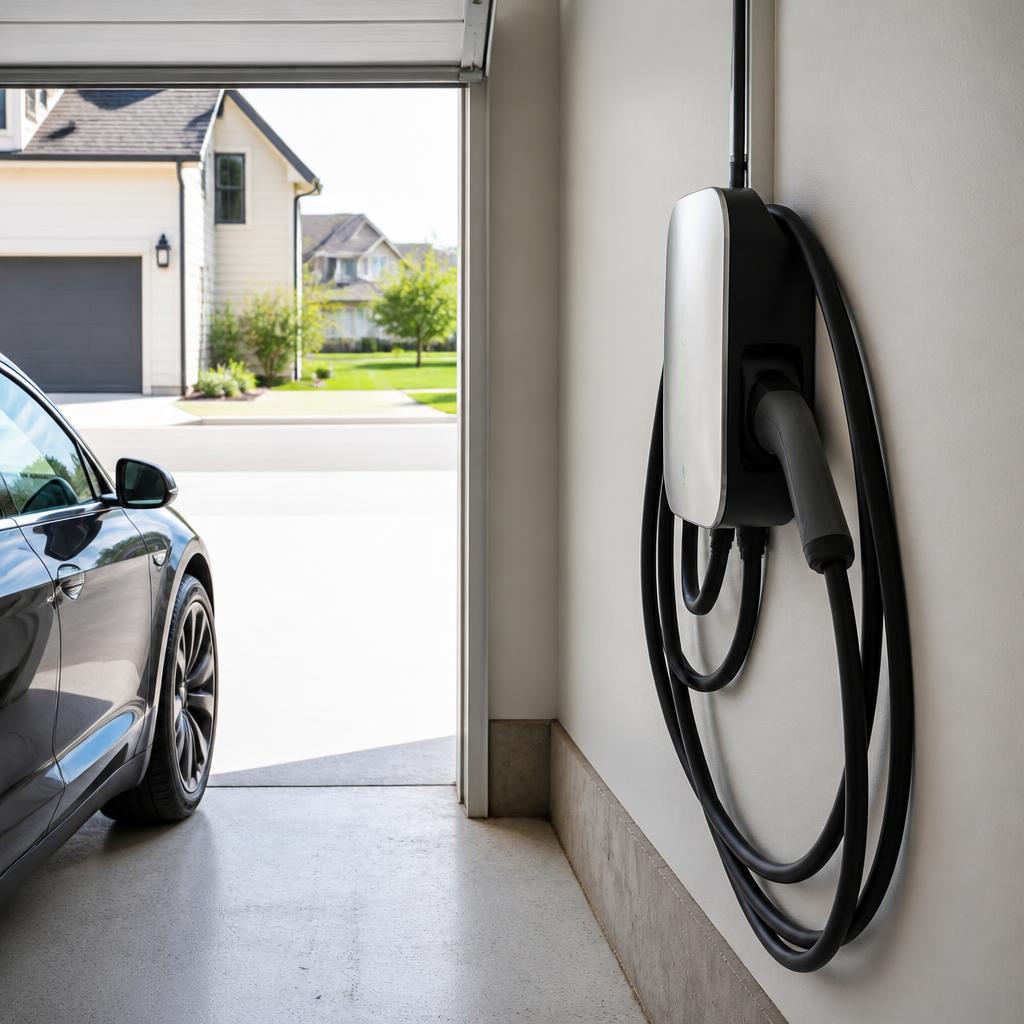
FPL Evolution Home is FPL's managed home-charging offer. In broad terms, the program supplies the home charger and covers its installation, and the driver charges at home on a plan designed around off-peak charging. The FPL EV charger supplied under the program is FPL's chosen hardware, installed by their program's installers, and the charging is managed so that most of it happens overnight when demand on the grid is lower. That managed, overnight pattern is the heart of the program: it is what lets FPL offer a simple bundled arrangement instead of a one-off purchase.
The FPL Evolution Home flexible program is the variant of the offer that gives drivers more flexibility in how and when they charge, rather than a rigid schedule. The exact shape of the flexible option — what is included, what it costs month to month, and what happens if you move house or leave the program — is set by FPL and changes over time. If you are comparing it with owning your own charger, the numbers that matter are the total cost over the time you expect to stay in the home, what happens to the charger if you move, and whether the charging schedule fits your driving pattern.
FPL EV charging: how the program works day to day
Day to day, program charging feels much like owning a charger: you plug in when you get home and the car charges overnight. The difference is behind the scenes. Under a managed program, charging may be scheduled or throttled to off-peak hours, and the program may collect charging data. For a driver with a predictable routine — home by evening, car parked overnight, a normal commute — that is invisible. For a driver with irregular hours, a second EV, or a car that needs a fast turnaround between trips, a managed schedule can feel restrictive, and that is worth testing against your real week before you commit.
There is also the question of the hardware itself. Under the program you get FPL's chosen charger; with your own install you choose from Tesla Wall Connector, ChargePoint Home Flex, Wallbox, Emporia, Grizzl-E and others, hardwired or plug-in, at the amperage your panel supports. If you already own a charger, or you want a specific brand for power-sharing with a second EV, owning is usually the simpler path. Our best home EV chargers 2026 guide compares the main options.
When owning your charger beats the FPL program
Owning usually wins in three situations. First, heavy drivers: if you drive long distances daily and need the fastest home charging your car accepts — a 48A hardwired install, for example — a program charger and a managed schedule may not keep up, while your own install is sized to your driving. Second, solar homes: if you have solar panels and want to time charging to your own production, your own charger and your own schedule give you that control. Third, anyone planning to stay in the home long term: a typical Level 2 install runs $800–$2,500 including the charger, and once it is paid for, the only ongoing cost is the electricity itself.
Owning also wins on flexibility. A plug-in charger on a NEMA 14-50 outlet travels with you if you move; a hardwired charger can be replaced on the same circuit; and you can switch brands when you change cars. The program route, by contrast, ties the charger to the program's terms. Neither route is wrong — the question is which one matches how long you will stay, how much you drive, and how much control you want over the hardware on your wall.
What to ask before you sign up — or before you install your own
If you are considering FPL Evolution Home, ask FPL directly: what is the total monthly cost and what does it include; what charger is supplied and at what amperage; what happens if you move house or cancel; who handles repairs if the charger fails; and whether the charging schedule can be overridden when you need a fast charge. Get the answers in writing and compare the total over three to five years with the cost of owning — a typical install of $800–$2,500, plus electricity at your FPL rate.
If you are considering your own install, the questions are different: does my panel have capacity for a 50A or 60A breaker; what is the wire run distance; is a permit required here; and is the quote all-inclusive, covering labour, materials, permit and inspection? Those four questions — panel capacity, distance, permit, and an all-inclusive quote — are the ones to ask any electrician before hiring. A free site survey with a load calculation answers all of them in one visit.
Not an FPL customer? Your utility has its own offer
Much of the Orlando area is not on FPL. The City of Orlando and St. Cloud are served by OUC, and Duke Energy Florida serves Casselberry and much of Orange County outside the OUC area. Each utility runs its own programs, and they change — Duke Energy, for example, offers a Charger Prep Credit and an off-peak charging credit for eligible customers in its territory. There is no single statewide Florida EV charger rebate, so the right program depends entirely on which utility serves your address.
When you book a survey, tell us your utility and we will flag the programs worth checking for your home. And whatever your utility, the electrical work is the same: a permitted 240V circuit, correctly sized breaker and wire, a load calculation, and an inspection. Read our Florida EV charger incentives and rebates guide for the full picture, including the federal credit that ended June 30, 2026.
Questions Homeowners Ask Us
What is the FPL Evolution Home program?
FPL Evolution Home is FPL's home charging program, bundling a home charger and its installation with a managed, mostly off-peak charging plan. Terms, pricing and eligibility are set by FPL and change over time — check FPL's current terms before enrolling.
What is the FPL Evolution Home flexible program?
It is the more flexible variant of FPL's home charging offer, giving drivers more choice in how and when they charge than a rigid managed schedule. Ask FPL for the current flexible-program terms, costs and cancellation rules.
Is the FPL EV charger program better than owning my own charger?
It suits drivers who want a bundled, low-hassle setup with a predictable routine. Heavy drivers, solar homes and long-term homeowners often do better owning a charger outright — a typical install is $800–$2,500 including the charger.
Does FPL Evolution Home work if I move house?
That depends on the program's current terms — ask FPL what happens to the charger and the plan if you move. A plug-in charger you own on a NEMA 14-50 outlet travels with you.
Ready to Get Your Charger Installed?
Every quote starts with a free on-site assessment and load calculation. Call (407) 555-0134 (placeholder) or visit our contact page to book your survey.
Related services: Residential EV charger installation, Level 2 EV charger installation, NEMA 14-50 outlet installation.
Related guides: Florida EV charger incentives and rebates, Will an EV charger raise my electric bill?, EV charger installation cost factors.
Service areas: Kissimmee, Ocoee — and all areas on our service areas page. Back to the EV charger guides hub.