When to Replace or Upgrade Your EV Charger
Cracked housing, damaged cable, repeated faults — or just a car that outgrew your charger. How to tell it is time.
EV chargers are built to last — typically 10–15 years or more — but they do not last forever, and they do not always keep up with the cars they serve. A charger bought for a short-range EV in 2019 may be too slow for a big-battery truck in 2026. A cable dragged across a garage floor for years will eventually fray. And a charger that starts faulting every week is telling you something. This guide covers the signs it is time to replace EV chargers, what an EV charger rip & replace involves, and when a repair is the smarter spend.
The good news: replacing a charger is usually the simplest job we do. If the circuit is sound, a rip & replace — removing the old unit and installing a new one on the existing breaker, wire and mount — is often a single short visit. The circuit gets a safety check first, because a new charger on a tired circuit is a wasted install. Read on for the signs, the process, and the honest repair-versus-replace maths.
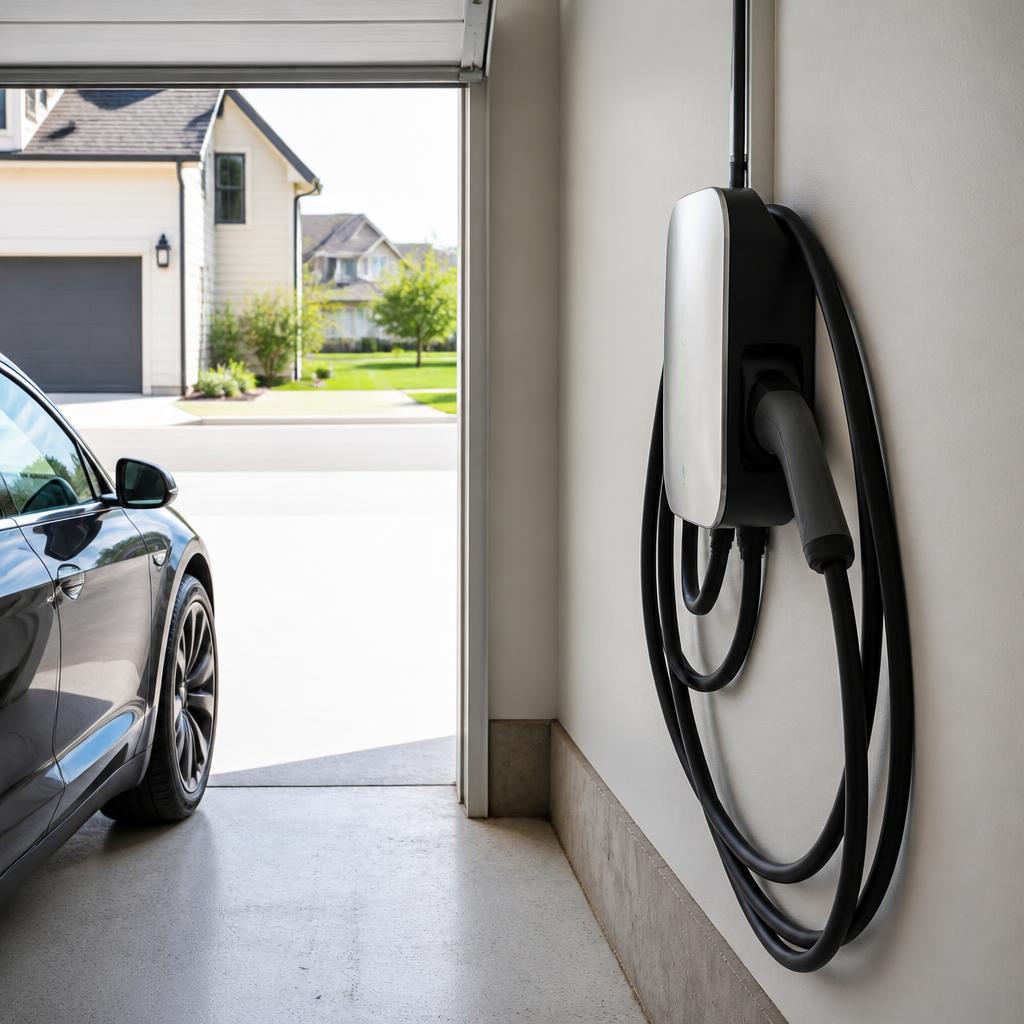
Signs it is time to replace your EV charger
The clearest signs are physical. A cracked or sun-damaged housing, a cable with cuts, exposed conductors or a connector that no longer latches firmly, and any sign of heat — discolouration at the plug, a melted smell, or a receptacle that feels hot — all mean the charger should be checked immediately and usually replaced. Heat damage is not a “keep an eye on it” problem: stop using the charger and call an electrician. A charger that has been through a flood, a lightning strike or a garage fire should also be replaced, not repaired, even if it still powers on.
The subtler signs are behavioural. Repeated faults that clear with a reset and come back, charging that stops halfway through the night, Wi-Fi that will not stay connected after every troubleshooting step, or a charger that only works at reduced amperage are all signs of a unit reaching the end of its reliable life. One fault is a glitch; a pattern is a verdict. Our tripping-breaker guide helps separate a charger fault from a circuit fault — the distinction matters, because replacing a healthy charger will not fix a bad circuit.
Or your car outgrew your charger
The other common reason to upgrade has nothing to do with failure: your car changed. A 16A or 24A charger that was fine for a small-battery car is slow for a long-range EV or an electric truck with a large battery, and a 32A plug-in charger cannot give you the 48A a new car accepts. If you now arrive home with a big battery to fill and leave early, the charger is the bottleneck — and a hardwired 48A install on a 60A circuit is the fix, provided your panel can carry it. A load calculation confirms that before you buy anything.
A home move can also trigger an upgrade. Selling a house is a good moment to refresh a tired charger, and moving into a new home with an old charger on the wall is a good moment to have it inspected before you trust it. And if you are adding a second EV, the question is not just “replace” but “replace with what” — a power-sharing pair may be the better spend than a single faster charger. See our guide to charging two EVs at home.
What an EV charger rip & replace involves
A rip & replace starts with a safety check of the existing circuit: breaker condition and rating, wire gauge and condition, receptacle condition if it is a plug-in install, and the earthing and GFCI arrangements. If the circuit is sound and correctly sized for the new charger, the old unit comes off, the new unit goes on the same mount or a new one, and the install is tested under load. If the circuit is not sound — undersized wire, a tired breaker, a heat-damaged receptacle — we fix the circuit first, because a new charger on a bad circuit inherits the old charger's problems.
The other question is whether the new charger needs a bigger circuit. Swapping a 32A charger for a 48A charger on a 40A circuit does not work — the 48A unit needs a 60A breaker and 6 AWG copper, hardwired. That turns a simple swap into a circuit upgrade, with new wire and a new breaker, and possibly a panel conversation. We quote the whole job upfront so there are no surprises: the swap, any circuit work, and the inspection. A typical Level 2 install in Orlando runs $800–$2,500 including the charger; a straight swap on a sound circuit is usually at the lower end of that range.
Repair or replace: how to decide
Repair wins when the fault is small and the unit is young: a damaged cable on a three-year-old charger, a failed Wi-Fi module, a worn connector holster. Many chargers can be repaired, and our EV charger repair and maintenance service diagnoses the fault before recommending anything. Replace wins when the unit is old, the fault is in the main board, parts are no longer available, or the repair costs a large fraction of a new unit. It also wins when the charger no longer matches your car — no repair makes a 16A charger into a 48A charger.
A useful rule: if the repair costs more than about half the price of a new charger, or if the unit has already been repaired once for the same fault, replace it. A new charger also brings a fresh warranty, current firmware, and modern safety features. And if the charger is out of warranty and the manufacturer no longer supports it, replacement is usually the only sensible option. We will always tell you when a repair is the cheaper honest answer — a repair customer is a customer who calls us again.
Before you buy a replacement
Three checks before you order a new charger. First, confirm the circuit: what breaker and wire size do you have, and what does the new charger need? Second, confirm the connector: J1772 or NACS, matching your car — see our plugs and connectors guide. Third, confirm the panel: if the new charger is faster than the old one, a load calculation may be needed, and on a 100-amp panel a load management device may be the alternative to a panel upgrade. Get those three answers and the replacement is a smooth, single-visit job.
And a practical note: keep the old charger's manual and any warranty paperwork, and tell your installer the old unit's make and model. It helps us match the mount, reuse the circuit correctly, and dispose of the old unit properly. If you are replacing because of heat damage, do not keep using the old charger “until the new one arrives” — the risk is not worth the few nights of public charging.
Questions Homeowners Ask Us
When should I replace my EV charger?
Replace it when the housing or cable is damaged, it faults repeatedly, it only charges at reduced amperage, or it is too slow for your current car. Heat damage, flood or lightning damage mean replace immediately — do not keep using it.
What is an EV charger rip & replace?
It is the removal of an old charger and installation of a new one on the existing circuit, after a safety check of the breaker, wire and receptacle. A straight swap on a sound circuit is often a single short visit.
Can EV chargers be repaired instead of replaced?
Often yes — cable damage, worn connectors and Wi-Fi faults are usually repairable, especially on younger units. Replace when the main board has failed, parts are unavailable, or the repair costs more than about half a new unit.
Ready to Get Your Charger Installed?
Every quote starts with a free on-site assessment and load calculation. Call (407) 555-0134 (placeholder) or visit our contact page to book your survey.
Related services: EV charger repair & maintenance, Level 2 EV charger installation, Tesla Wall Connector installation.
Related guides: How long does an EV charger last?, EV charger maintenance guide, EV charger keeps tripping breaker.
Service areas: Kissimmee, Apopka — and all areas on our service areas page. Back to the EV charger guides hub.