How Long Does EV Charger Installation Take?
How long does EV charger installation take? For most Orlando homeowners, the answer is pleasantly short: a standard residential Level 2 install is a single visit of a few hours. But that is the install itself, not the whole job — the permit, the inspection, and any panel work add calendar time around it. This guide breaks the timeline into its parts, so you know what to expect from the first call to the final walkthrough.
Orlando EV Installers follows a four-step process: call and describe your setup, on-site assessment and load calculation, permitted install — usually one visit — then inspection, testing and walkthrough. Call (407) 555-0134 (placeholder) to start. A typical Level 2 home install runs $800–$2,500 including the charger, with simple short-run jobs from around $599.
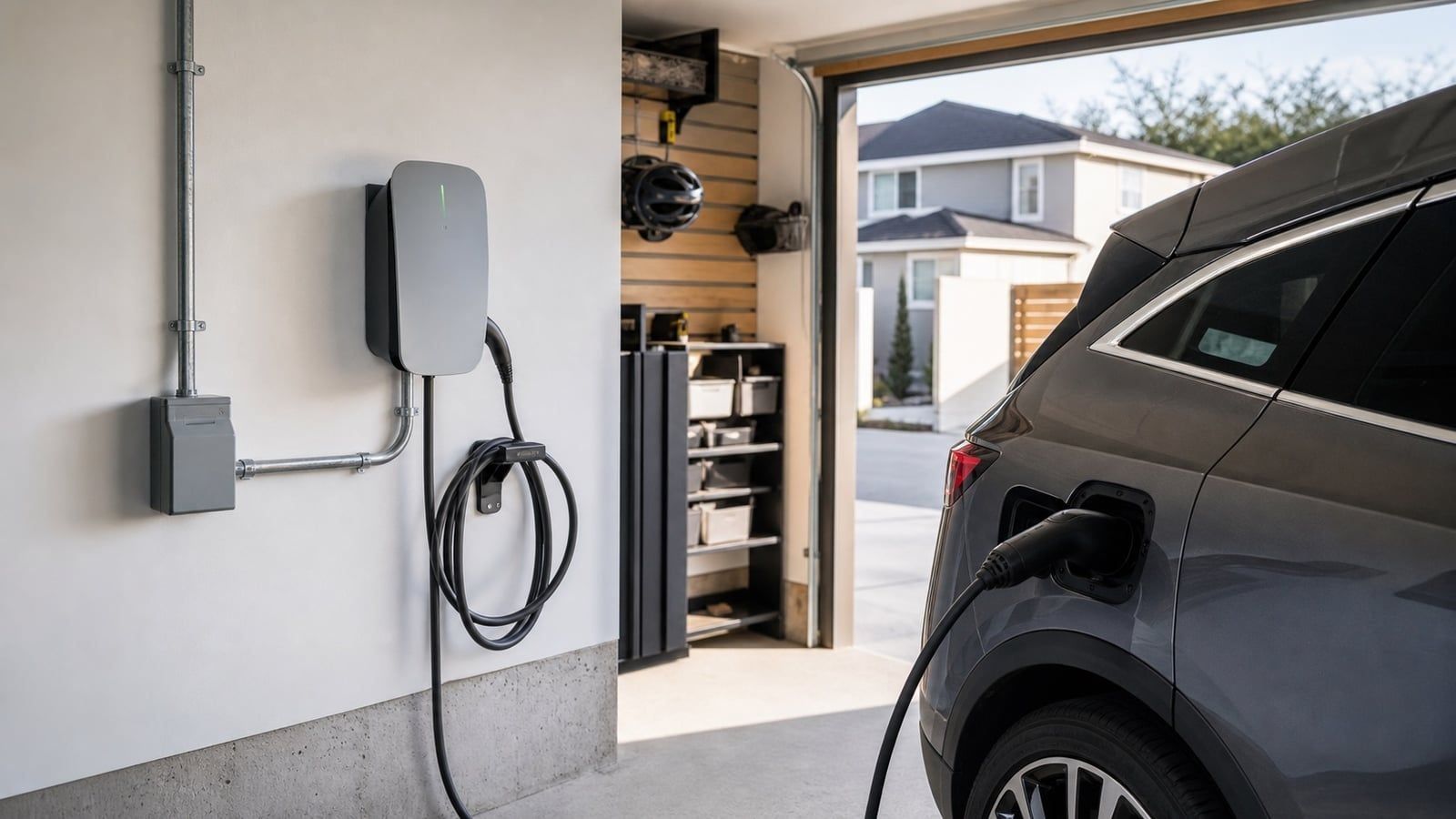
The Standard Install: A Single Visit of a Few Hours
A standard residential Level 2 install — panel in or near the garage, short wire run, panel with capacity and a spare breaker slot, no trenching — takes a few hours on site. The electrician mounts the charger, runs the new 240V circuit, fits the breaker, connects and tests the charger, sets up the app and charging schedule, and walks you through it. Most homeowners are charging their car the same evening.
That timeline assumes the permit is already approved and the charger is on hand. The most common reason a standard install slips is not the work itself but the scheduling around it: the permit review, the delivery of a particular charger model, or the inspection slot after the work. Book the site survey early, and the install itself is the shortest part of the job.
What Adds Time on Site
Three things add hours to the install visit itself. A long wire run — from a panel on the far side of the house, through an attic, or to a detached garage — adds time for every foot of cable, conduit and fixings. Trenching to a detached garage adds the most: digging, laying conduit, backfilling and restoring the surface is a full extra job, sometimes a second visit. And wall construction matters: finished drywall and masonry block take longer to run wire through than an open, unfinished garage wall.
A panel upgrade also adds time on site, because the old panel is removed, the new one is fitted, the circuits are transferred, and the whole system is tested. That work is usually done in a day, but it is a longer day than a simple charger circuit, and it needs the power off for part of it — plan for that.
How Long Does the Permit and Inspection Take?
The permit and inspection add calendar time, not working time. The application is filed, the city or county reviews it, the install is scheduled once it is approved, and the inspection is scheduled after the work is done. Each step is usually quick on its own — a routine residential EV charger permit is a standard application — but the gaps between steps add up to days. In Seminole County the permit may come from the county or from your city, depending on the address; our Seminole County permit guide explains the split, and our Orlando permit guide covers the city process.
What does the inspection check? The breaker size, wire size and type, GFCI protection where required, mounting and clearances, grounding and bonding, and that the work matches the permitted plans. Most installs pass on the first inspection when the work was planned with a load calculation and done to code. If a correction is needed, we fix it and call for a re-inspection — a normal part of the process, not a delay to worry about in advance.
Panel Upgrades and Service Work: Up to 30 Days
When a load calculation shows the panel cannot safely carry the charger, the timeline stretches. A panel or service upgrade involves the utility as well as the permit office and the inspector: the utility must approve the service change, the new meter or service entry must be coordinated, and the inspection must be scheduled after the swap. An August 2026 survey of panel and service projects found that most finish within 30 days — the physical work is usually a day, and the coordination and scheduling account for the rest.
That is why the load calculation comes first, before any date is promised. If your home needs panel work, you should know in the first visit, not discover it on install day. And it is why the cheaper alternatives — a lower-amperage charger setting or a load management device — are worth trying first: they keep the job to a single visit and a few hours, instead of a multi-week project. See our guide to whether you need a panel upgrade and our 100-amp panel guide.
How Long Does It Take to Install a Tesla Charger?
A Tesla Wall Connector install follows the same timeline as any Level 2 charger. The unit itself — mounting, wiring and commissioning — takes under an hour once the circuit is in place. The circuit is the work: the breaker, the wire run, the permit and the inspection are the same as for a ChargePoint Home Flex, a Wallbox, an Emporia or a Grizzl-E. A Tesla install is not faster or slower than any other brand; the panel, the distance and the permit decide the time, not the logo on the charger. Our Tesla Wall Connector ownership guide covers the unit itself.
A Realistic Timeline, Start to Finish
| Step | Typical time |
|---|---|
| Call and site survey | Booked within days; survey under an hour |
| Permit application and approval | Days, depending on the office |
| Standard Level 2 install | Single visit, a few hours |
| Inspection and walkthrough | Scheduled after install; usually days |
| Panel or service upgrade, if needed | Most projects finish within 30 days |
From first call to charging your car, a straightforward job is usually a matter of days. A job that needs panel work is usually a matter of weeks. Either way, the survey is the step that tells you which one you are looking at — and it is free.
The Bottom Line
Plan on a few hours for the install, a few days for the permit and inspection around it, and up to 30 days if the panel or service needs work. Start with the survey, and you will have a real date instead of a guess.
Orlando EV Installers are licensed and insured Florida electricians, and we handle permits and inspection on every job, with a load calculation first. Call (407) 555-0134 (placeholder), or see our Level 2 EV charger installation, our residential EV charger installation and our Tesla Wall Connector installation. Related reading: our Orlando permit guide, our what to expect guide and our panel upgrade guide. We serve Winter Park and Oviedo and all of Central Florida — more in the blog and guides hub.
Questions Homeowners Ask Us
How long does EV charger installation take?
A standard residential Level 2 install is a single visit of a few hours, once the permit is approved. Panel upgrades, trenching or long wire runs take longer, and permit and inspection scheduling adds calendar time around the install.
How long does the permit and inspection take?
The permit application is usually reviewed quickly, but the inspection must be scheduled after the install, which adds days to the calendar timeline. Your installer handles both and books the inspection for you.
How long does it take to install a Tesla charger?
A Tesla Wall Connector install is the same as any Level 2 install: a single visit of a few hours for a standard job, longer if the panel needs work or the wire run is long. The charger itself takes under an hour to mount and commission once the circuit is in.
Do I need a permit to install an EV charger in Orlando?
Yes, permits are required for new 240V circuits in Florida. We handle the permit and inspection for you as part of every installation.
How long does a panel upgrade take?
Most panel and service projects finish within 30 days, according to an August 2026 survey of such projects. The physical panel swap is usually a day; the utility coordination, permit and inspection add the rest of the calendar time.