Can My HOA Stop Me Installing an EV Charger in Florida?
Can HOA stop EV charger installation Florida? It is one of the first questions Orlando condo and townhome owners ask — and the short answer is reassuring: under Florida law, an association cannot prohibit an EV charger in an owner's designated parking space. It can set reasonable conditions, and the owner pays, but a flat ban is not something the law supports. This guide explains the statutes, what your association can still ask for, and what to do if the board says no.
This guide is general information about Florida law, not legal advice. Association rules vary, and a disputed denial may need advice from a Florida attorney who handles community association law.
Orlando EV Installers works in HOA communities across Orange, Seminole and Osceola counties every week — townhomes in Lake Nona, condos downtown, gated communities in Windermere and Dr. Phillips. Call (407) 555-0134 (placeholder) and we will help you put together an approval packet your board can say yes to. A typical Level 2 home install runs $800–$2,500 including the charger, with simple short-run jobs from around $599.
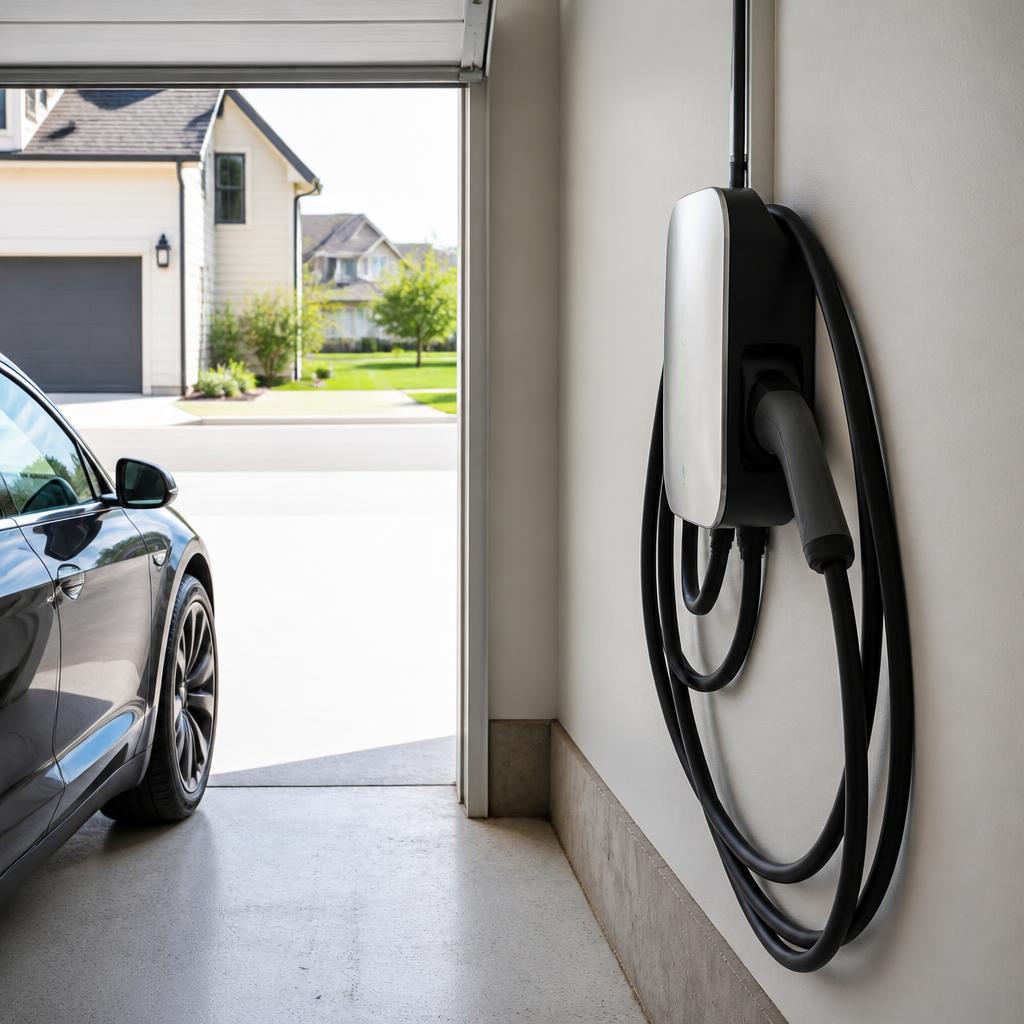
The Law: FL Statutes 718.113 and 720.3075, Strengthened by HB 163
Two Florida statutes cover this. FL Statute 718.113 applies to condominiums, and FL Statute 720.3075 applies to homeowners associations. Both were strengthened by HB 163, and together they say that an association cannot prohibit an owner from installing an EV charger in the owner's designated parking space. The owner pays for the installation, including the charger, the wiring, the permit and any restoration the association reasonably requires.
That is a right-to-charge rule, not a free-for-all. The association may still set reasonable architectural and insurance conditions — and that word, reasonable, is doing the work. A condition that genuinely protects the building, the common wiring or other residents is reasonable. A condition designed to make the install so expensive or so slow that nobody bothers is not. If you are unsure whether a condition is reasonable, that is the point at which independent legal advice is worth having.
What Can My HOA Still Ask For?
Most associations ask for a small set of things, and most of them are things a good installer provides anyway. Expect an architectural approval form describing the charger model, where it will be mounted, and the wire route from the panel to the parking space. Expect a requirement that the work is done by a licensed electrician, that a permit is pulled, and that the installation is inspected. Expect a request for proof of insurance, and possibly a requirement that you carry liability coverage for the charger. Some associations ask about the appearance — a tidy, wall-mounted charger in a neutral colour, with conduit run neatly — and about how the work affects common areas, such as a shared garage wall or a parking deck.
What an association should not ask for is a different charger brand without a technical reason, a wire route that is needlessly long and expensive when a shorter safe route exists, or an open-ended approval process with no decision date. If a condition feels like that, ask for it in writing, with the rule it relies on cited.
The Architectural Approval Packet: How to Get a Yes
Shared Garages and Shared Parking
Renters: Charging at Home Through the Owner
When the Board Says No
First, get the denial in writing, with the rule or document it relies on. Then read it against the statutes: does it prohibit a charger in a designated space, or does it raise a specific, reasonable concern you can answer? Often a revised plan — a different wire route, a neater mounting, added insurance proof — turns a no into a yes. Submit the revision in writing and keep every exchange on paper.
If the board still refuses, or does not answer at all, do not start work in defiance of a written denial. That is the point to seek advice from a Florida attorney, who can write to the association citing the statutes. An attorney's letter is a last resort, but it is a recognised one, and boards that have ignored a homeowner often respond to a lawyer's letter. Keep the tone factual throughout: you are asking the association to follow the law, not picking a fight with your neighbours.
Costs and Practical Points
The owner pays for the install, so budget the same as any homeowner: a typical Level 2 install runs $800–$2,500 including the charger, simple jobs from around $599, and panel work adds roughly $2,000–$5,000 when a load calculation requires it. Condo and townhome jobs can cost more than a detached-house job when the wire run is long — from a panel in a utility room to a parking space two floors down, for example — and that is exactly why the site survey and load calculation come first. Every quote starts with that survey, and permits and inspection are handled as part of the job.
Also check your parking: where should the charger go so the cable reaches the car without crossing a walkway? Where does the conduit run? Is the charger indoors in a garage or outdoors, where weatherproof equipment is needed? Our guide to installing an EV charger outdoors in Florida covers the outdoor case.
The Bottom Line
Florida law is on the side of the owner who wants a charger in their own designated parking space. The association can set reasonable conditions and the owner pays — but it cannot simply say no to charging. A complete approval packet, a licensed electrician, a permit and a paper trail are your best tools.
Orlando EV Installers are licensed and insured Florida electricians, and we handle permits and inspection on every job, with a load calculation first. Call (407) 555-0134 (placeholder), or see our residential EV charger installation, our Level 2 EV charger installation and our NEMA 14-50 outlet installation. Related reading: our Florida HOA EV charger rights guide, our apartment and condo charging rights guide and our Orlando permit guide. We serve Downtown Orlando and Lake Nona and all of Central Florida — more in the blog and guides hub.
Questions Homeowners Ask Us
Can my HOA stop me installing an EV charger in Florida?
Under Florida Statutes 718.113 for condominiums and 720.3075 for HOAs, strengthened by HB 163, an association cannot prohibit an EV charger in an owner's designated parking space. It can set reasonable architectural and insurance conditions, and the owner pays for the install.
What can my HOA still ask for?
A reasonable architectural approval form, details of the appearance and wire route, proof of a licensed electrician and a permit, and proof of insurance. Conditions must be reasonable — they cannot be used as a back-door ban.
Can I install an EV charger in an apartment or condo?
In many cases yes, if you own a designated parking space or your landlord or association approves a dedicated or shared solution. Renters normally act through the property owner. See our apartment and condo charging rights guide for the options.
I rent — can I still charge at home?
Often yes, with the landlord's agreement. A plug-in charger on a NEMA 14-50 outlet is the easiest option for renters because it can travel with you when you move.
What should I do if my board says no?
Get the denial in writing, ask which rule it relies on, submit a revised plan that answers each concern, and keep a paper trail of every exchange. This guide is general information, not legal advice — for a disputed denial, consider advice from a Florida attorney.