EV Charger Load Management Guide
The device that lets a 100-amp panel carry an EV charger — how it works, when it avoids a panel upgrade, and when it cannot.
Can a load management device help me avoid a panel upgrade? For many Orlando homeowners, it is the question that decides whether a charger install costs $800–$2,500 or $800–$2,500 plus another $2,000–$5,000 for panel work. The answer, often, is yes. A load management device monitors your home's electrical demand in real time and throttles the EV charger when the house peaks — pausing or slowing charging when the air conditioning, water heater and range are all running, and resuming full speed when demand drops.
This guide explains how EV charger load management works, when it can avoid a panel upgrade, what the code says about it, and when it cannot help and an upgrade is genuinely needed. It is the guide to read before you accept a panel upgrade quote.
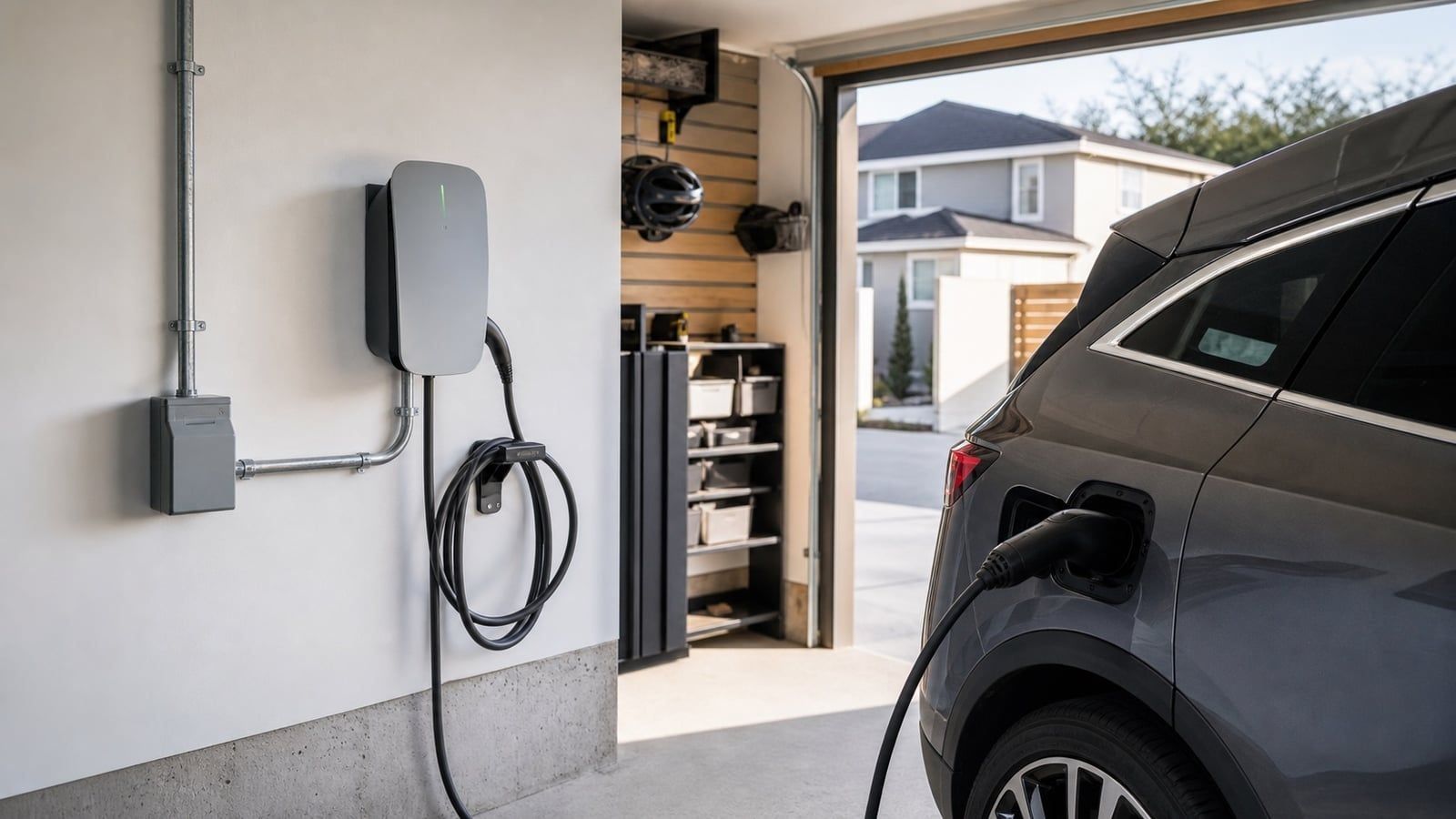
How does a load management device work?
A load management device — sometimes called a load manager, an energy management system, or a load-shedding device — sits between your panel and your charger and watches the total load on your service. It uses a current sensor on the main feed to measure what the house is drawing right now. When the total approaches the service limit, it tells the charger to slow down or pause. When the house load drops — the air conditioning cycles off, the water heater finishes — it tells the charger to speed back up. The car still charges fully overnight, because the house rarely peaks all night; the charging simply flexes around the peaks.
The result is that a panel that could not safely carry a new 60A charger circuit on paper can carry it in practice, because the charger never draws full power at the same moment the house does. It is a dynamic solution to a static problem: the load calculation assumes everything runs at once, and load management ensures that, for the charger at least, it does not. The device is code-compliant and inspector-approved, and it is standard in our quotes when it saves the homeowner money.
Can a load management device avoid a panel upgrade?
Can a load management device help me avoid a panel upgrade? Often, yes — and it is the first alternative we try on a 100-amp or 125-amp panel. A panel upgrade adds roughly $2,000–$5,000 to a job, while a load management device costs a fraction of that, and it lets you keep your existing panel. On a 100-amp panel in an older Winter Park, Maitland or Kissimmee home, load management is frequently the difference between an affordable install and a job that gets postponed. The load calculation decides: if the calculation shows the panel is tight but manageable, load management is the answer; if it shows the panel is genuinely overloaded even without the charger, an upgrade is needed.
There is also a code basis for it. NEC 220.70 covers managed chargers — chargers whose load is controlled by an energy management system — and it allows the load calculation to take the managed load into account. That is not a loophole; it is the code recognising that a charger which pauses when the house peaks is a different load from one that draws full power regardless. Your electrician confirms the arrangement for your jurisdiction, and the inspector checks it like any other part of the install.
Load management vs lower amperage vs panel upgrade
There are three honest alternatives to a panel upgrade, and they are worth comparing. Lower amperage is the simplest: install the charger on a 40A circuit for 32A charging instead of a 60A circuit for 48A. It costs nothing extra, it is enough for most daily driving, and it is the right answer when the panel is only slightly tight. Load management is the middle option: it keeps the faster charging and adds a device that manages the peaks. A panel upgrade is the last resort: it is the most capable and the most expensive, and it is right when the panel is genuinely full, the service is old, or you plan to add more load later — a second EV, a pool heater, an addition.
The order matters. A good installer tries lower amperage and load management before recommending an upgrade, and tells you the price of each so you can choose. If an installer jumps straight to a panel upgrade without a load calculation or a discussion of load management, get a second opinion. The upgrade may still be right — but it should be the conclusion of a calculation, not the opening offer.
Load management for two EVs
Load management is even more valuable with two EVs. Two chargers on one circuit can power-share — splitting the available power between them — and a load management device can throttle the pair together when the house peaks. That combination lets a 100-amp panel carry two chargers where it could not carry two separate circuits, and it is the standard design for a two-EV household on a tight panel. Our guide to charging two EVs at home covers power-sharing in detail, and the two ideas — power-sharing between chargers, load management between the chargers and the house — work together.
Scheduling is the free version of the same idea: set one car to charge early in the evening and the other later at night, and the two loads never overlap. A load management device automates that and handles the unexpected peaks — the night the air conditioning, the dryer and both chargers all want power at once. Together, scheduling and load management make a tight panel work harder than its rating suggests.
When load management cannot help
Load management cannot fix a panel that is unsafe or genuinely overloaded. If the panel is old, damaged, has a recalled breaker type, or has no physical space for a new breaker, the answer is an upgrade or a sub-panel, not a device. It also cannot help if the service itself — the wires from the street — is too small, which is a utility matter: a service upgrade from 100A to 200A needs the utility company involved. And it cannot help if you plan to add a lot more load soon — a second EV, an electric water heater, a home addition — in which case the upgrade is the honest long-term answer and load management is a delay, not a solution.
The load calculation is what separates those cases, and it is why every quote starts with a site survey. A typical Level 2 install in Orlando runs $800–$2,500 including the charger, with simple short-run jobs from around $599; a load management device adds a modest amount to that, and a panel upgrade adds roughly $2,000–$5,000. Get the calculation, see the three prices, and choose with the facts.
Questions Homeowners Ask Us
Can a load management device help me avoid a panel upgrade?
Often yes. It monitors your panel and throttles the charger when the house peaks, so a 100-amp panel that could not carry a new circuit on paper can carry it in practice. A load calculation decides.
How does EV charger load management work?
A device with a current sensor on the main feed watches total demand and tells the charger to slow down or pause when the house peaks, then resumes full speed when demand drops. The car still charges fully overnight.
Does my panel have capacity for a 50A or 60A breaker?
Only a load calculation can say for certain. On a 100-amp panel the answer is often a lower-amperage install or a load management device rather than a panel upgrade.
Is load management code-compliant?
Yes — NEC 220.70 covers managed chargers, and load management devices are inspector-approved. Your electrician confirms the arrangement for your jurisdiction.
Ready to Get Your Charger Installed?
Every quote starts with a free on-site assessment and load calculation. Call (407) 555-0134 (placeholder) or visit our contact page to book your survey.
Related services: Electrical panel upgrade, Level 2 EV charger installation, Residential EV charger installation.
Related guides: Charging two EVs at home, EV charger breaker and wire size guide, EV charger installation cost factors.
Service areas: Winter Park, Maitland — and all areas on our service areas page. Back to the EV charger guides hub.