How Long Does an EV Charger Last?
Typically 10–15 years or more — but cables, connectors and Florida weather decide the real number.
How long does an EV charger last? It is one of the first questions homeowners ask after the price, and the answer is reassuring: a quality home Level 2 charger typically lasts 10–15 years or more, with many units still going strong well beyond that. There are no moving parts to wear out in the way a car engine wears out, and the electronics are solid-state. But “typically” hides a range, and the real lifespan of your charger depends on what wears first — usually the cable and connector, not the box on the wall.
This guide covers what determines a charger's lifespan, what fails first, and the simple habits that add years: shade, cable care, surge protection and firmware updates. It also covers when a charger that still works is nonetheless worth replacing, because lifespan and usefulness are not the same thing.
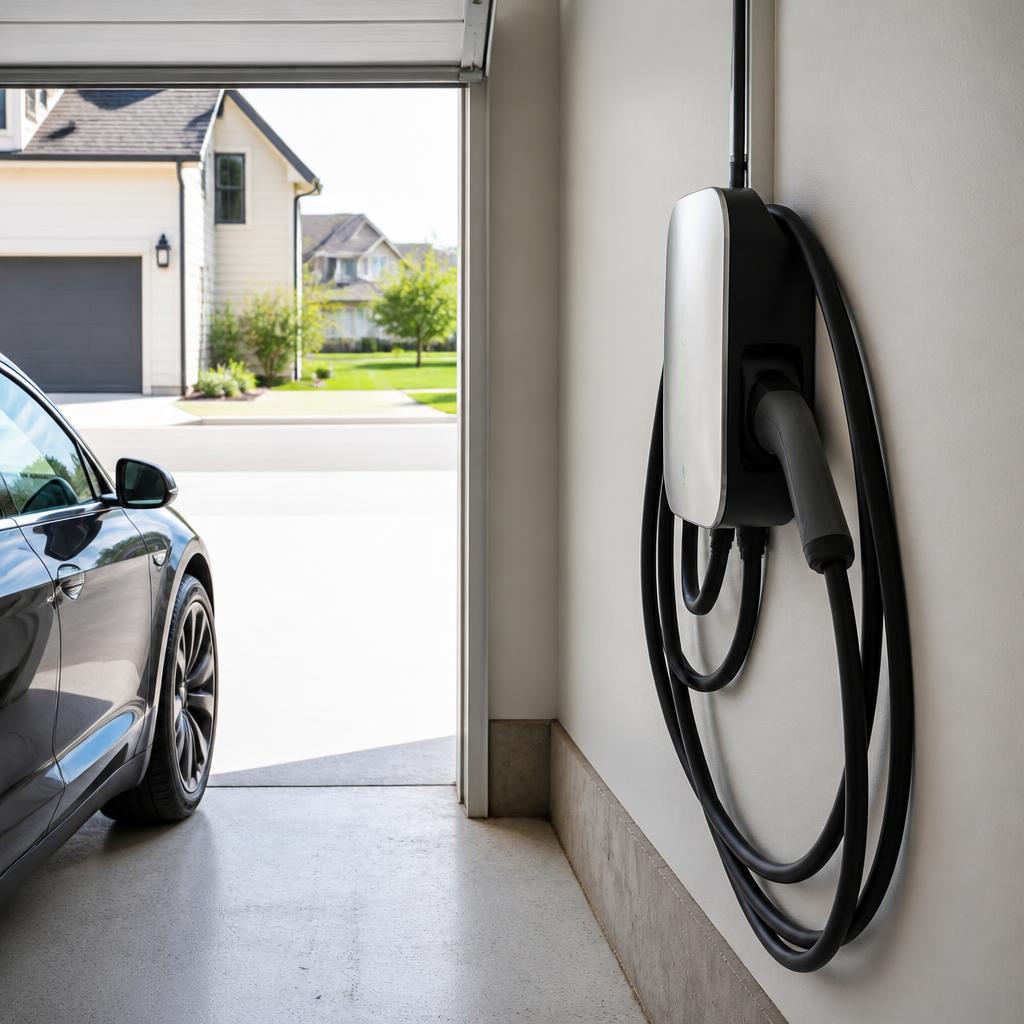
The typical lifespan: 10–15 years and beyond
A well-made Level 2 charger — Tesla Wall Connector, ChargePoint Home Flex, Wallbox, Emporia, Grizzl-E — is built for a decade or more of daily use. The wall unit itself is a robust piece of equipment: a sealed enclosure, solid-state power electronics, and a contactor that switches thousands of times. In a garage, out of direct sun and rain, there is very little to degrade it. Outdoor units live a harder life, but an outdoor-rated charger correctly installed should still reach the same sort of lifespan.
What the headline figure does not tell you is that lifespan is not the same as warranty. A charger can be out of warranty and still perfectly good, and a charger can fail inside its warranty for a reason the warranty does not cover — lightning damage, for example. Judge a charger by its condition and its behaviour, not by its age alone. A twelve-year-old charger that charges reliably every night is a good charger; a three-year-old charger that faults weekly is not.
What wears out first: cable, connector and receptacle
Cables and connectors wear first. The charging cable is handled every day — plugged in, unplugged, coiled, uncoiled, sometimes dragged across concrete or left hanging in the sun. Over years, the cable jacket cracks, the connector latch weakens, and the pins wear. A connector that no longer latches firmly, or a cable with cuts and exposed conductors, is a replacement item, not a “keep using it” item. Keep the cable off the floor, hang it on its holster after every charge, and never let the car drive over it — those three habits alone add years to a cable.
On plug-in installs, the receptacle is the other wear item. A NEMA 14-50 receptacle carrying a continuous 40A load for years will eventually loosen, and a loose receptacle heats up — which is why we install industrial-grade receptacles and why any sign of heat or discolouration means a call to an electrician. On hardwired installs there is no receptacle to wear out, which is one more reason hardwired tends to last longer in practice. See our EV charger maintenance guide for the quarterly checks that catch wear early.
Florida weather: heat, humidity, lightning and sun
Florida weather is the biggest local factor in charger lifespan. Heat is the quiet killer: a charger baking in direct sun on a south-facing driveway wall runs hotter, and heat degrades electronics and cable insulation over time. Shade helps enormously — a carport, an awning, or simply the shaded side of the house. Humidity and rain attack seals and connections, which is why outdoor installs need correct weatherproofing and why a charger that was fine in a garage may struggle on an exposed wall if it was not installed for it.
Lightning is the dramatic risk. Central Florida is the lightning capital of the country, and a strike near your home can destroy a charger in an instant. Surge protection on the EV circuit is the defence, and it is cheap compared with a replacement charger. If your charger fails after a storm, do not just reset it and carry on — have it checked, because surge damage can be partial and can leave a charger unsafe even when it appears to work.
Firmware, updates and obsolescence
Smart chargers have a second kind of lifespan: software. Firmware updates fix bugs, add features and keep the app working with your phone. Enable automatic updates and check the app monthly — a charger that stops receiving updates is not dead, but it will gradually lose features and may eventually lose app support. “How often does an EV charger need updating?” is really a question about the app: enable auto-update, and check monthly. A charger that still charges without Wi-Fi is still a charger; a charger whose app no longer works is still a charger too, just a dumber one.
Obsolescence is the other slow force. A charger bought for a J1772 car may feel dated when your next car uses NACS, and a 16A charger is slow for a modern long-range EV. That does not mean the old charger is broken — it means it no longer matches your needs. Our guide to replacing or upgrading your charger covers when to replace a working charger and when to keep it.
How to make your charger last longer
The habits are simple and they work. Keep the cable on its holster, off the floor and out of direct sun. Keep the unit shaded where possible. Keep vents clear and the area around the charger free of clutter. Check the cable and connector quarterly for cracks, wear and heat discolouration. Keep firmware updated. And fit surge protection if you do not have it. None of this is onerous, and together it is the difference between a charger that lasts ten years and one that lasts fifteen or more.
And when something does go wrong, do not ignore it. A charger that trips, faults or smells hot is telling you something, and the fix is usually cheapest when it is caught early. A typical Level 2 install in Orlando runs $800–$2,500 including the charger — but a repair caught early costs far less than a replacement, and a maintenance check costs less than either.
Questions Homeowners Ask Us
How long does an EV charger last?
Typically 10–15 years or more for a quality Level 2 home charger. Cables and connectors wear first; the wall unit itself usually outlasts them. Shade, cable care and surge protection extend its life.
What wears out first on an EV charger?
The cable and connector — they are handled daily and suffer sun, dragging and wear. On plug-in installs the receptacle also wears. Keep the cable on its holster and check it quarterly.
Does Florida heat shorten an EV charger's life?
Yes — direct sun and heat degrade electronics and cable insulation over time. Shade the charger where possible, keep vents clear, and fit surge protection against lightning.
How often does an EV charger need updating?
Enable automatic firmware updates and check the app monthly. Updates fix bugs and add features; a charger that stops receiving them still charges, but gradually loses app features.
Ready to Get Your Charger Installed?
Every quote starts with a free on-site assessment and load calculation. Call (407) 555-0134 (placeholder) or visit our contact page to book your survey.
Related services: EV charger repair & maintenance, Level 2 EV charger installation, Residential EV charger installation.
Related guides: EV charger maintenance guide, When to replace or upgrade your EV charger, EV charger keeps tripping breaker.
Service areas: Winter Park, Lake Mary — and all areas on our service areas page. Back to the EV charger guides hub.