DIY vs Professional EV Charger Installation
Mounting a plug-in charger is DIY-friendly. Running a new 240V circuit is not. Here is exactly where the line sits.
Can I install an EV charger myself? Can you install your own EV charger, or can I install an EV home charger myself — the question comes in many forms, and the answer is the same in all of them: it depends on what “install” means. Mounting a plug-in charger on an existing, correct outlet is fine for a confident homeowner. Running a new 240V circuit through your walls, sizing a breaker, and landing wire in a live panel is permitted electrical work, and it is where DIY ends and a licensed electrician begins.
This guide draws that line clearly, explains why it sits where it does, and covers the questions to ask before hiring an electrician — including how to check a licence. It is not a DIY wiring guide: we do not publish instructions that enable unpermitted work, because the consequences of getting a 240V circuit wrong are a failed inspection, a voided insurance policy, or a fire.
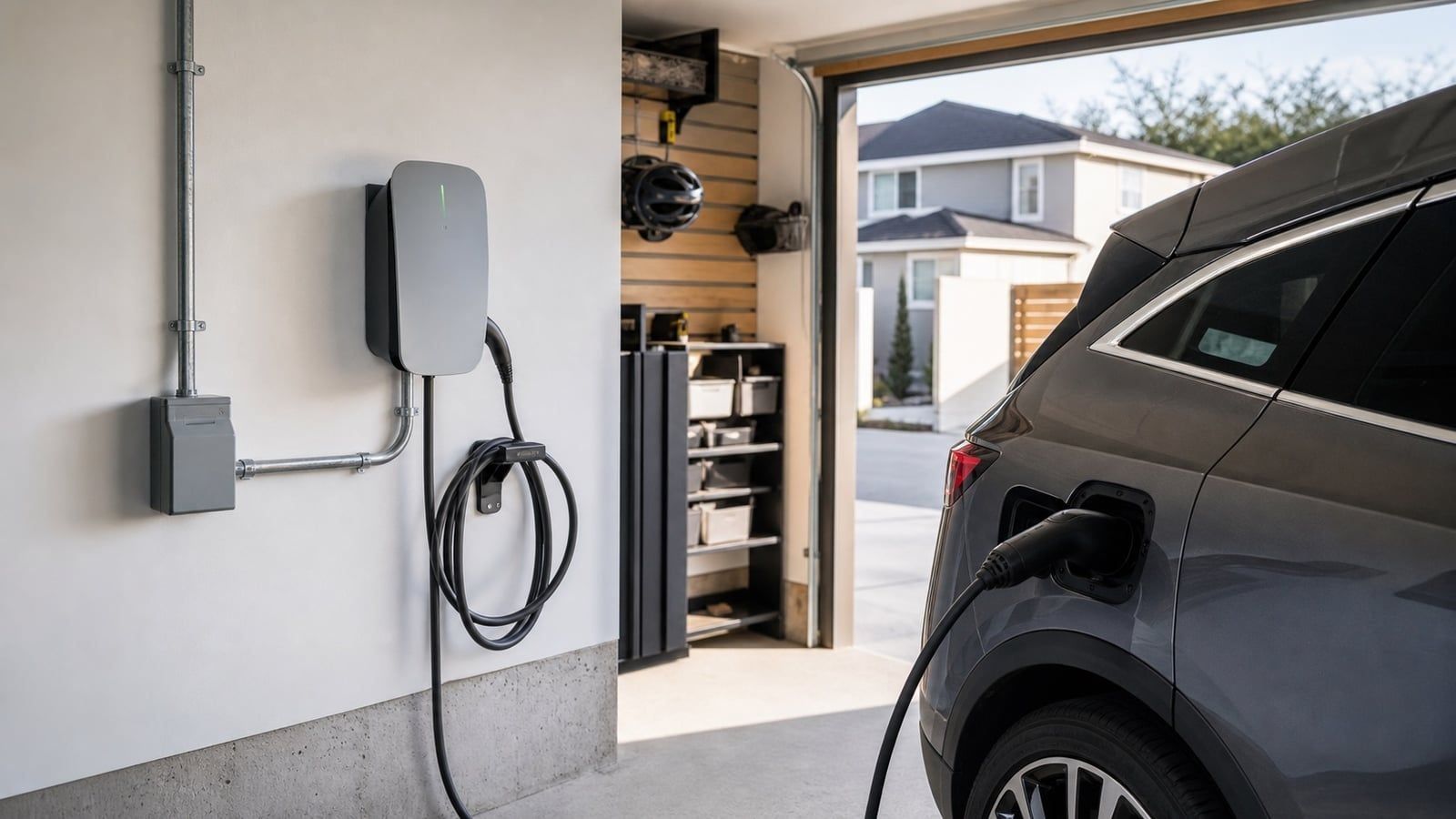
Can I install an EV charger myself? The short answer
Can I install an EV charger myself? If you already have a correct, permitted NEMA 14-50 outlet in your garage and you buy a plug-in charger, then yes — plugging it in, mounting the holster and setting up the app is a reasonable DIY job. The electrical work is already done and already inspected. If you do not have the outlet, or the outlet is not on a dedicated circuit, or you want a hardwired charger, then no — that is a new circuit, and a new 240V circuit in Florida requires a permit, a load calculation and a licensed electrician. The distinction is not about skill or confidence; it is about the work itself.
Do I actually need an electrician? For a new circuit, yes — a licensed electrician. The reasons are practical, not just legal. A load calculation under NEC Article 220 decides whether your panel can carry the new circuit at all. Breaker and wire sizing follow the 80% rule for continuous loads, and getting either wrong causes tripping at best and heat damage at worst. Torque specifications on terminations matter — loose connections are the most common cause of melted receptacles. And the inspection, which only a permitted job gets, is the independent check that the work is safe. A DIY video cannot do any of that.
What DIY can safely cover
There is plenty a homeowner can do. You can choose the charger, decide where it goes, mount the cable holster, set up the app, schedule off-peak charging, and keep the cable and connector in good condition. You can also do the homework that makes the professional job cheaper and faster: measure the distance from your panel to the charger location, note your panel size, check which utility serves you, and photograph the panel and the parking area. That preparation is genuinely useful, and it is what a good survey starts with.
You can also install a plug-in charger on an existing outlet — provided the outlet is the right type, on a dedicated circuit, correctly sized and already permitted. If you are unsure about any of that, a quick survey answers it. The cost of finding out is a free survey; the cost of guessing wrong is a tripping breaker, a hot receptacle, or a charger that never works properly. When in doubt, ask before you plug in.
What goes wrong with DIY 240V work
The failure modes are consistent, and we see them regularly. Undersized wire on a 48A charger. A breaker sized to the charger instead of 125% of the charger, so it trips every night. A NEMA 14-50 receptacle wired without GFCI protection, or with a cheap residential-grade receptacle that melts under a continuous load. Terminations that were not torqued to specification, which loosen and heat up over months. And the most expensive failure of all: unpermitted work discovered at a home sale, when the buyer's inspector flags it and the seller pays for a licensed redo plus the permit they skipped.
Insurance is the other risk. Unpermitted electrical work can void a claim if it contributes to a fire, and it can complicate a sale even when nothing goes wrong. A permitted install, by contrast, is documented, inspected and insurable. The saving from a DIY circuit is a few hundred dollars; the exposure is the whole house. That is the maths that matters, and it is why every guide that recommends DIY for new 240V circuits is giving bad advice.
What should I ask my electrician before hiring?
What should I ask my electrician before hiring? Four questions cover the essentials: does my panel have capacity for a 50A or 60A breaker; what is the total wire run distance; is a permit required here; and is the quote all-inclusive — labour, materials, permit and inspection? A good electrician answers all four at the survey, in writing, with a load calculation behind the panel answer. Ask also which charger brands they install, whether they handle the permit and inspection, and what the workmanship guarantee covers in general terms.
How do I check an electrician's license? In Florida, verify the electrical contractor's licence with the Florida Department of Business and Professional Regulation (DBPR) and with your county licensing office — never take a licence number on trust, and never accept a verbal assurance in place of a verifiable licence. We hold a Florida electrical licence and insurance, and we show both before work begins. What qualifications do you need to install EV chargers? A state-certified or registered electrical contractor licence, local registration, insurance, and manufacturer training for the brands installed.
The honest cost comparison
A professional install costs more upfront than a DIY circuit — a typical Level 2 home install in Orlando runs $800–$2,500 including the charger, with simple short-run jobs from around $599. But the comparison is not DIY parts versus professional price. It is DIY parts plus your time, plus the permit you still need, plus the inspection, plus the risk, versus a single all-inclusive figure that includes all of it and is guaranteed. For a plug-in charger on an existing outlet, DIY wins easily. For a new circuit, the professional route is cheaper once the real costs are counted — and it is the only route that ends with a signed-off inspection.
If budget is the concern, say so at the survey. A lower-amperage install on your existing panel, a plug-in charger on a NEMA 14-50 outlet, or a load management device instead of a panel upgrade can all bring the price down honestly, without cutting corners on safety. What we will not do is skip the permit, undersize the wire, or install a charger on a circuit the load calculation says cannot carry it. Those are not savings; they are liabilities.
Questions Homeowners Ask Us
Can I install an EV charger myself?
Only plug-in use of an existing, correct outlet is DIY-friendly. Running a new 240V circuit is permitted work that requires a licensed electrician in Florida — a permit, a load calculation and an inspection.
Do I actually need an electrician?
For a new circuit, yes. Plug-in use of an existing correct outlet needs no electrician; a new circuit needs a licensed electrician for the load calculation, breaker and wire sizing, permit and inspection.
What should I ask my electrician before hiring?
Does my panel have capacity for a 50A or 60A breaker? What is the total wire run distance? Is a permit required here? Is the quote all-inclusive? Ask all four, and verify the licence with the Florida DBPR.
Can you install your own EV charger?
You can install a plug-in charger on an existing correct outlet yourself. A hardwired charger or a new circuit should be installed by a licensed electrician — unpermitted work can void insurance and fail a home sale inspection.
Ready to Get Your Charger Installed?
Every quote starts with a free on-site assessment and load calculation. Call (407) 555-0134 (placeholder) or visit our contact page to book your survey.
Related services: Level 2 EV charger installation, Residential EV charger installation, Electrical panel upgrade.
Related guides: EV charger permit guide for Orlando, EV charger breaker and wire size guide, EV charger installation cost factors.
Service areas: Apopka, Ocoee — and all areas on our service areas page. Back to the EV charger guides hub.